
técnicas de diseño antiguo para enfrentar el cambio climático en la construcción
abr 05, 2026
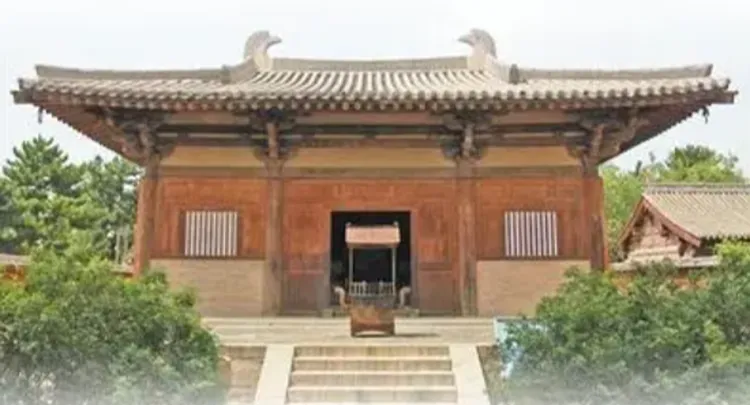
Title: Ancient Design Techniques to Face Climate Change in Construction Author: Zhen Xi Reviewer: Xu Lai, Zhang Linlin Source: People's Daily Researchers find that roofs in ancient Chinese architecture adapted to climate change, optimizing snow and costs.
From the Tang Dynasty to the Ming and Qing Dynasties, the ancient Chinese continuously adjusted the slope of their building roofs to better adapt to the local climate. This allowed them to cope with changes in snow precipitation over the centuries, ensuring building safety and reducing maintenance costs.
The design of ancient building roofs is closely related to climate change. This has been a topic of research for Fu Zongbin's team at the School of Atmospheric Sciences, Nanjing University, and Ge Quansheng's team at the Institute of Geographic Sciences and Natural Resources Research, Chinese Academy of Sciences.
The roof slope is negatively correlated with the average temperature in winter in central and eastern China. During cold periods, roofs become noticeably steeper; in warm periods, the roof slope clearly decreases. However, once the 'height-to-distance ratio of the roof', which is the proportion of the roof height to the distance between the front and rear eaves, reaches approximately 23%, it no longer goes below this value," explained Li Siyang, a member of the research team and associate professor at Nanjing University.
Consideration of the functional needs of construction.
There are multiple aspects that reveal the reasons for changes in roof slopes. Firstly, from a construction design perspective, changes in roof slope are often made to adapt to different climatic conditions. For instance, in areas with heavy snowfall, steeper roofs can more effectively shed accumulated snow and prevent collapse due to snow weight. Secondly, the slope of the roof may also relate to the aesthetic design of the building. Architects might alter the slope to create visual appeal or harmony with the surrounding environment. Additionally, changes in slope can affect the use of internal spaces, such as providing higher attic spaces. Moreover, different roofing materials can influence the choice of slope. Certain types of roofing materials may require specific slopes to ensure waterproofing and durability. In summary, changes in roof slope result from a combination of various factors in building design, including climate, aesthetic considerations, internal space requirements, and roofing material characteristics.
Tang Dynasty architecture is spacious and broad, Song Dynasty architecture is delicate and detailed, while Ming and Qing Dynasty architecture is steep and complex... The evolution of architectural style in different periods of China has also drawn the team's attention regarding changes in roof slope, which vary between steep and gentle. "What factors have driven changes in roof slope?"
Previously, some pioneering scholars in the research of historical buildings observed that from the Tang Dynasty to the Ming and Qing Dynasties, the slope of roofs has generally shown a tendency to become steeper, increasing from approximately 20% in the 8th century to around 35% in the 18th century. Regarding this variation, traditional research on architectural history often explores differences in roof slope from perspectives such as the development of construction techniques and the evolution of aesthetic styles.
"However, architecture has a strong residential attribute, leading us to wonder, behind the evolution of architectural styles over time, is there an influence of the functional needs of the architecture itself? After raising this question, the team began their research."
During the research process, the team discovered an interesting phenomenon: at the Longmen Temple in Pingshun, Shanxi, architectural remains from the Five Dynasties period to the Ming-Qing period have been preserved. The main hall of the Buddha (Daxiong Baodian), built during a cold period (1098), and the eastern annex hall (Dongpeidian), dating from 1498 to 1504, show steeper roofs with ratios of roof elevation of 29.67% and 30.50%, respectively. In contrast, the Hall of the King of Heaven (Tianwangdian), built during a warm period (1271-1294), has a flatter roof with an elevation of only 26.92%.
Team members are in discussion. Photo provided by the respondent.
"Finally, we are trying to understand this phenomenon from a climatic perspective," explained Ding Ke, a team member and assistant professor at the School of Atmospheric Sciences, Nanjing University.
To verify this hypothesis on a millennial scale, due to the lack of readily available historical data on roof slope variations and climate data, the team reviewed over 200 officially recorded buildings from the Tang Dynasty to the Ming-Qing period in northern regions to establish a database of ancient roof height-to-span ratios and collected and organized climate change data from historical periods.
Statistics show that changes in roof slopes over the years present a trend of oscillating increases on a centennial scale. Additionally, it is observed that in warm periods, roof slopes are lower, while in cold periods, they are higher.
Relationship between slope and historical climate change.
Discovery of the drainage mechanism that causes roof slope.
Among various meteorological factors, determining which ones to study has become a key consideration.
"Does the variation in roof slope really relate to wind, rain, or snow?" "Wind? Since it is a closed building, the change in roof slope has limited impact on indoor air temperature." "Rain? Then, if rainfall increases during warm periods, the roof should become steeper to improve drainage capacity, which contradicts the observed trend."
After several discussions, some hypotheses have been ruled out, and the roof drainage capacity has become the most feasible option.
"Since existing architectural remains are predominantly found in the semi-arid and semi-humid regions of eastern and central China, where winter climate is relatively cold and there is a lot of snow, we assume that allowing snow to slide off the roof quickly to avoid damage to the dwelling could be an important factor in the design of roofs. To verify this assumption, we first need to search ancient texts for data on snowfall during cold weather and steep roofs to see if more frequent and extreme snowfalls were indeed recorded during those times," explained Ding.
In this context, the team combined modern meteorological data, historical temperature reconstruction data, and archaeological background to reconstruct the changes in snowfall in central and eastern China over a thousand years. They simulated the changes in roof slope necessary to cope with variations in snow. The results indicate that the ideally calculated changes in roof slope according to snowfall are almost identical to the changes in the slope of the architectural remains over the last thousand years.
"This means that snowy climatic conditions can have a significant impact on the design of traditional Chinese architecture," explained Ding.
Consulting a large amount of information.
Study on the adaptation of architectural form to climate change.
During the research process, the team also discovered a curious issue: ancient constructions built before 940 AD systematically exhibit a shallower roof slope than those of later periods. For instance, the west side hall of the Longmen Temple was built in the third year of Tongguang of the later Tang Dynasty (925 AD), and although, from a meteorological perspective, it belongs to a similar cold period as the Ming and Qing Dynasties, the roof slope is not as steep as in those periods. It is important to note that during this stage, the roof slope was in a period of rapid growth, reflecting the process in which builders at the time, due to the increasing demand for snow evacuation during cold periods, sought to adjust the roof slope through technical innovations.
An interesting example of this hypothesis is the increase in the roof height-to-span ratio from 19.24% at the Daxian Hall of the Nanzheng Monastery in Wutai Mountain in 782 AD to 29.67% at the Daxiong Baodian of Longmen Temple in 1098 AD. From the construction perspective, certain parts of the roof and beam construction seem to have undergone changes in relative position. For example, the relative position of the lowest beams shifted from below the eaves to being level with or above the eaves. Although the structural changes of this period are related to the systematic development of ancient wooden architecture, their objective effect indeed facilitates the construction of steeper roofs.
The research team studies the ancient architecture of Mount Wutai in Shanxi. Photo by Shu Jinqi.
Additionally, starting from the second half of the Ming Dynasty during the Little Ice Age of the Ming and Qing Dynasties, a new method of roofing curve design, known as the "elevation method," began to appear. This method allowed for further increases in roof slope angles and was incorporated into official construction standards in the 1830s, establishing a design criterion for the roofs of official architecture thereafter.
"Reviewing the research, we can see that builders of different dynasties in China seemed to have adapted to climate changes through architectural forms and technical adjustments," said Li Siyang.
Based on interdisciplinary research on climate and ancient architecture, the team will publish a new research result in 2025, pointing to the "mystery of the development of dougong during the Six Dynasties." The research explores why the dougong structure decreased during the Three Kingdoms, Jin, and Northern and Southern Dynasties periods, and why this phenomenon only occurred during that time.
Due to the absence of examples of wooden constructions prior to the Tang Dynasty in the country, the research team has compiled around 250 examples of architectural representations, and in conjunction with temperature reconstruction data and related ideal experiments, has found that deep eaves supported by dougong significantly reduce the intensity and duration of sunlight received by the buildings. During the Three Kingdoms, Jin Dynasties, and the Northern and Southern Dynasties period, the climate was generally colder, increasing residents' need for heating through solar radiation, leading to a trend towards shorter eave designs. Thus, the team suggests that the climatic context of that time could provide a possible explanation for the reduction in the use of eave forms supported by dougong.
"The wisdom of ancient architecture still has much to discover, and climate change offers a new perspective for observation." The research team stated that they are expanding this perspective to more extensive and diverse studies in the field of archaeology.
Planning and production.
#construcción
#clima



© 2025 Tribu Salud.