
el poder del dragón de fruta y su relación con la salud infantil
abr 11, 2026
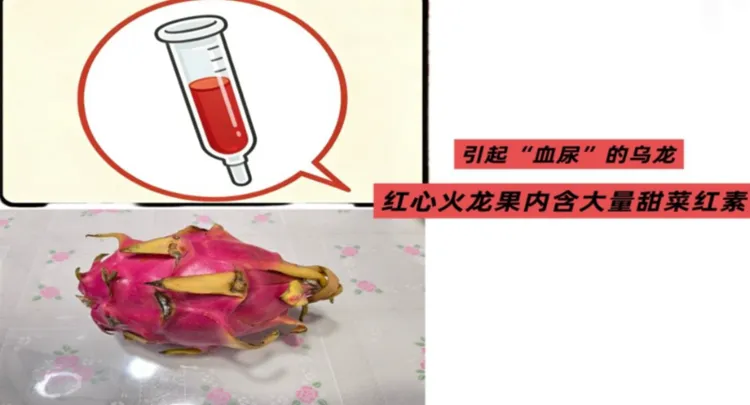
Title: The Power of Dragon Fruit and Its Relation to Children's Health Profile: Parents concern about "blood in the urine" after consuming red pitaya; experts clarify that these are natural pigments, not health problems. Keywords: ['Child Health', 'Healthy Eating Education.'] Author: Not specified Reviewer: Not specified Commissioner: Not specified Production information: Not specified
"It looks like my daughter has blood in her urine! What should I do?" My friend called me quickly, her tone filled with anxiety. I immediately asked her if the girl had been crying, if she had frequent urination or urgency. How was her mood? Had there been anything special in her diet in the past few days? My friend told me that the girl was very active, eating, drinking and playing normally, except that she had eaten red pitaya the day before, something she had never eaten before.
After hearing her, I had a good guess and quickly reassured her that it was probably the dragon fruit causing this, and there was no need to panic. But just to be safe, I suggested taking the child to the hospital for a check-up. Later, my friend reported that the child’s urine routine results were completely normal, and it was indeed a case of "pseudo hematuria" caused by dragon fruit, a false alarm.
Red-fleshed pitaya contains a large amount of betalains, which are natural pigments that the human body cannot fully absorb. These pigments are excreted through urine and feces, which can make both turn red, resembling blood in urine or feces. However, this is a normal phenomenon.
In daily life, when we encounter this situation, parents can make a simple differentiation without panicking immediately:
1. Observe the color: red caused by pigments is a uniform and bright pink, similar to watermelon juice; the color of actual hematuria is generally dark red or black, and may be mixed with blood threads or clots.
2. Smell for odors: red urine caused by dye does not have a special smell; actual hematuria may have a fishy odor.
3. Observation of fasting: stop eating pitaya for 1-2 days, and the red color may gradually disappear.
Of course, the safest way is to go to the hospital for a doctor to make an evaluation. If the child is fine, has no abdominal pain, does not have a fever, and has only noticed that their feces have turned red after eating pitaya, it is enough to increase water intake, and no special treatment is required. Parents can be reassured.
#salud infantil
#educación saludable sobre alimentación.



© 2025 Tribu Salud.