
Síntomas de Parkinson: no solo temblores, también rigidez y lentitud
abr 11, 2026
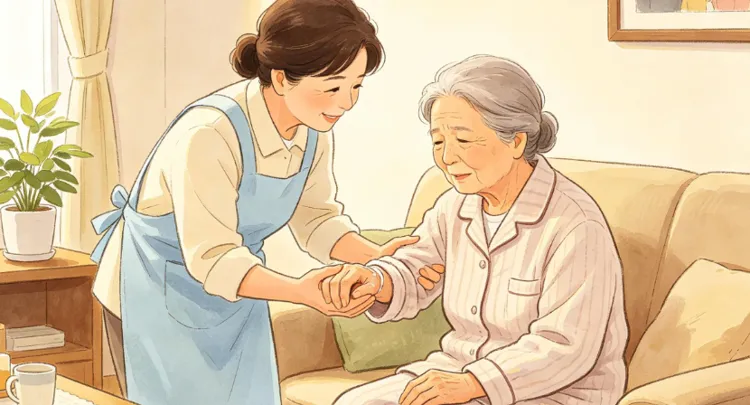
Title: Symptoms of Parkinson's: not just tremors, but also rigidity and slowness. Author: Yang Shen, Neurology Department, First People's Hospital of Xiangtan. Review: Hunan Medical Chat. Production information: Follow @HunanMedicalChat for more health and scientific knowledge.
On April 11th, the 30th World Parkinson's Day is celebrated, and the theme is 'Technology empowers, caring throughout the process.' In simpler terms, it means that from the detection of early symptoms to daily treatment, technology can be of great assistance, thus improving the quality of life for patients.
As a neurologist, I often encounter situations like these: some people notice their hand trembles when they grip something and panic, thinking they have Parkinson's; others walk increasingly slowly and exhibit less expression but always say 'that's what happens when you grow old,' delaying their consultation.
Today, I will explain in simple terms what Parkinson's disease really is.
Firstly, Parkinson's disease is not far from us.
Parkinson's disease is the second most common neurodegenerative disease after dementia. Currently, there are over 5 million patients with Parkinson's in our country, and this number continues to increase annually. It is even more concerning that it is no longer considered a 'disease of the elderly'; 1 in 20 patients exhibits symptoms before the age of 50.
The key phrase is: 'Early detection and early intervention can lead to peaceful coexistence with the condition for many years.'
Tremors in the hands are not always a sign of Parkinson's, but there are certain signals that should alert you.
Parkinson's is more commonly known for its symptom of 'tremor,' but in reality, the central symptom is 'slowness.'
Three core motor symptoms (remember 'slow, rigid, tremor'):
Movement has become slow. Fastening buttons takes a long time, arms hardly move when walking, turning feels like it’s being played in slow motion, facial expressions have reduced, and family members say you have a 'mask-like face,' a technical term known as 'mask facies.'
Rigidity — limbs feel stiff. It feels as if weights are tied to your arms and legs, and when others help you move, it feels like there is a 'gear stick' sensation.
Resting tremor. When seated and still, the hand appears to be 'kneading pills' or 'counting money'; however, when engaged in some activity or walking, the tremor decreases.
Easily overlooked 'non-motor symptoms' (which may appear earlier than hand tremors):
Loss of the ability to smell food (anosmia).
Chronic constipation.
Kicking and shouting during sleep (REM sleep behavior disorder).
Easily feeling depressed and anxious.
Simple self-assessment: If you answer 'yes' to more than 3 of the following 9 questions, it is recommended to consult a neurology specialist.
Do you find it hard to get up from the chair?
Is the handwriting you produce smaller than before?
Has the volume of your voice decreased?
Is it easy for you to fall when walking?
Do you sometimes feel your feet are glued to the ground and can't lift them?
Are your expressions no longer as rich as before?
Can your arm or leg tremble involuntarily?
Is it difficult to fasten your own buttons?
9. Does walking mean dragging your feet and taking small steps?
Third, can it be treated now? — Medications, surgery, and rehabilitation exercises.
First, it must be said: currently there is no cure for Parkinson's disease, but it can be very well managed.
1. Pharmacological treatment: the most basic weapon.
The most commonly used medication is called 'levodopa', which replenishes the 'dopamine' missing in the brain. Medication timing is important: take it 1 hour before a meal or 1.5 hours after eating, and do not consume it with high-protein foods (milk, eggs, tofu) or else the efficacy will be reduced.
Remember: do not increase or stop medication on your own, as this could lead to severe side effects.
2. Deep brain stimulation (DBS) – The 'wonder' for patients in mid to advanced stages.
When the effects of medication diminish and involuntary movements appear, 'deep brain stimulation,' commonly known as a 'brain pacemaker,' may be considered. A small electrode is placed in the brain, essentially 'switching off' the uncontrolled nerves. Many patients with a pacemaker experience immediate reductions in tremors and can cut their medication doses by half.
3. Rehabilitation training.
Rehabilitation includes gait training, balance training, speech therapy, and occupational therapy, among others. Gait training corrects shuffling steps using a metronome, while balance training improves unstable posture through tai chi. Speech therapy focuses on volume control through exercises to strengthen the voice, and occupational therapy trains fine motor skills such as fastening clothing buttons.
Fourth, in home care, it is very important to keep these points in mind.
The vast majority of patients recover at home, and there are several things that family members can do that are even more effective than taking medication:
Fall prevention: install handrails in the bathroom and place non-slip mats; do not leave objects in hallways; keep a small night light on at night.
Medication adherence: Medications for treating Parkinson's disease must be taken on time. Set several alarms on your phone and take the medicine at the scheduled time.
To avoid coughing while eating: make the patient sit upright and lower their chin slightly; each bite should be a bit smaller; pureed or soft foods are safer.
Addressing constipation: upon waking, drink a glass of warm water and massage the abdomen in a clockwise direction; consume more dragon fruit, oatmeal, and plums.
Psychological support: Many patients can experience depression, anxiety, and even hallucinations. Remember these nine words: do not argue, do not deny, do not blame.
Maintaining exercise: While walking, colored tape can be placed on the floor to encourage the patient to take large steps; read aloud for 10 minutes each day; perform expression exercises in front of a mirror, such as inflating cheeks and smiling.
Five, common misconceptions, let's clarify once and for all.
Mistake 1: Hand tremors mean Parkinson's.
Incorrect. Hand tremors can also be caused by conditions like hyperthyroidism, stress, or essential tremor. The typical tremor of Parkinson's is characterized by 'resting tremor, not tremor when performing actions.'
Mistake 2: Parkinson's can be inherited.
Incorrect! Only about 10% of patients have a family history; the vast majority of affected individuals have no significant genetic ties.
False 3: If you have Parkinson's, you won't live long.
That is incorrect! Parkinson's disease itself is not fatal but affects the quality of life. With appropriate treatment and consistent exercise, many people live into their eighties or nineties.
Mistake 4: Surgery should be waited on until one cannot move at all.
On the contrary. When the effects of the medication clearly worsen, it is time to assess surgical indications; missing the optimal timing will lessen the effect of the surgery.
Advice: Although there is currently no cure for Parkinson's disease, it is not an incurable condition. Technology is advancing, and treatment methods are becoming increasingly numerous. The most important thing is: recognize it in time, do not be afraid, and follow appropriate treatment.
The First Hospital of Xiangtan reminds: if you or a family member exhibit symptoms like slow movements, tremors, or instability when walking, we welcome you to the neurology department of the hospital. Together we will scientifically face 'Parkinson's,' to ensure quality and dignified living.
Hunan Medical Chat Special Contributor: Yang Shen, First People's Hospital of Xiangtan, Neurology Department.
Follow @HunanMedicalChat for more health and scientific knowledge.
(Edit ZS)
#párkinson
#conocimientos sobre la salud.

© 2025 Tribu Salud.