
El caldo de huesos no aporta calcio: elige bien tus ingredientes
abr 12, 2026
Provider entity: Chongqing Association of Scientific Writers.
Author: Xiong Meilin, Faculty of Pharmacy, Chongqing University, Pharmacy Class 2, 2024.
Teaching Guide: Associate Professor Luo Jie, Faculty of Pharmacy, Chongqing University, and Chief Engineer Zhou Jingbo from Professor Zhou's Science Communication Garden.
Expert Reviewer: Li Hanbin.
Statement: Except for original content and special explanations, some images are sourced from the internet and are not for commercial use, only used as scientific communication material. All copyright belongs to the original authors. If there is any infringement, please contact us for removal.
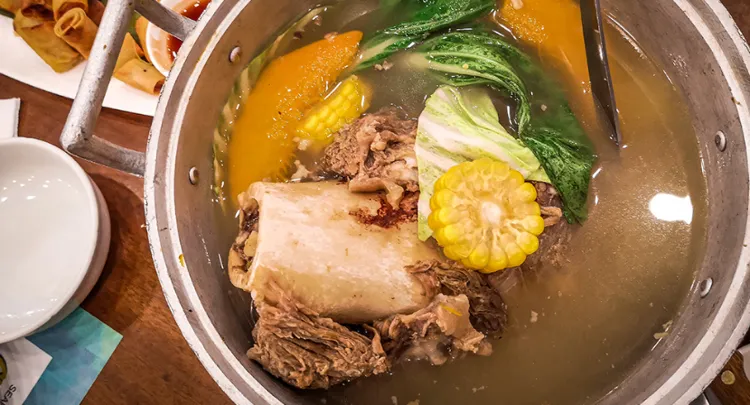
It is said that 'injuries to muscles and bones take a hundred days to heal.' After completing fixation and bandaging treatment in the hospital, it usually takes several weeks for inflammation and pain to gradually subside. When the fractured bone is basically healed, rehabilitation training should be scheduled. There is a saying in folk belief that 'you should eat what you want to replenish,' leading many to boil bone broth for calcium after a fracture. However, this practice has no scientific basis. Only by selecting the right ingredients can effective support be provided for the reconstruction of damaged bone tissue.
The human skeleton is like a precise 'building of calcium and phosphorus': calcium acts like bricks, bone collagen serves as structural reinforcement, and vitamins and minerals are the cement that binds and strengthens. Once a fracture occurs, the reconstruction of this 'building' requires the cooperation of multiple nutrients to collaboratively build a solid bone structure.
Bone healing is a process in which various nutrients work together, each indispensable. Calcium, as the main 'building material,' has a significantly higher demand during the phases of formation and mineralization of the callus; timely supplementation helps the new bone tissue to form rapidly. High-quality proteins are the key component for bone collagen synthesis, acting as the 'elastic scaffold' of the bones, allowing the repaired bone to have greater strength and reduce the risk of fragility fractures. Vitamin D is the 'exclusive transporter' of calcium, promoting its intestinal absorption and ensuring its proper delivery to the bones. During winter, when there is less sunlight, it is even more crucial to have it to prevent calcium loss. Meanwhile, vitamin C acts as an 'accelerator' in collagen synthesis, promoting soft tissue repair and reducing swelling, creating favorable conditions for callus growth. Zinc and manganese function as 'regulators' of bone metabolism; zinc accelerates the proliferation of osteoblasts, while manganese contributes to the formation of the bone matrix. Together, they can significantly improve the efficiency of bone repair.
Different stages of bone repair have dynamically changing nutritional demands, so dietary strategies must be adjusted accordingly. During the 1 to 2 weeks following a fracture, the affected area is still swollen and gastrointestinal function is also weak. At this time, it is not advisable to rush to replenish nutrients but to focus on reducing inflammation and bruising. Moderate amounts of mung bean honey with cucumber, along with light vegetables, can be consumed, providing adequate proteins while avoiding fatty and spicy foods. Between weeks 3 and 8, swelling begins to decrease and callus formation starts, entering a crucial stage for calcium and protein supplementation. Daily consumption of protein-rich foods is recommended, along with vitamin C to promote nutrient synergy. After the ninth week, the callus enters the phase of calcification and modeling, and bone strength gradually recovers. The diet should focus on nutritional balance. Whole grain rice, nuts, deep-sea fish, animal liver (for vitamin D), and fresh fruits and vegetables can be included to maintain metabolic balance. Additionally, combining this with moderate exercise allowed by the doctor ensures that the new bone tissue better fits physiological needs.
In the rehabilitation diet, it is important to consider some common mistakes. Many people start taking large amounts of calcium in the early stages of a fracture, which could lead to excess calcium in the blood, inhibit callus formation, and even induce kidney stones. There are also those who blindly rely on bone broth to supplement calcium, when in reality, the calcium content in broth is extremely low and its fat content is high. Long-term consumption not only has a poor effect on calcium supplementation but can also lead to weight gain or digestive problems. Its efficiency in calcium supplementation is far inferior to that of a glass of milk or a piece of tofu. Moreover, so-called 'reactive trigger foods' (such as chicken, fish, eggs, etc.) can be consumed in moderation and can actually provide high-quality proteins that favor tissue repair, so there is no need to avoid them indiscriminately.
#dieta nutritiva
#la curación ósea



© 2025 Tribu Salud.