
Cómo crear un ambiente saludable en el hogar: consejos clave
mar 08, 2026
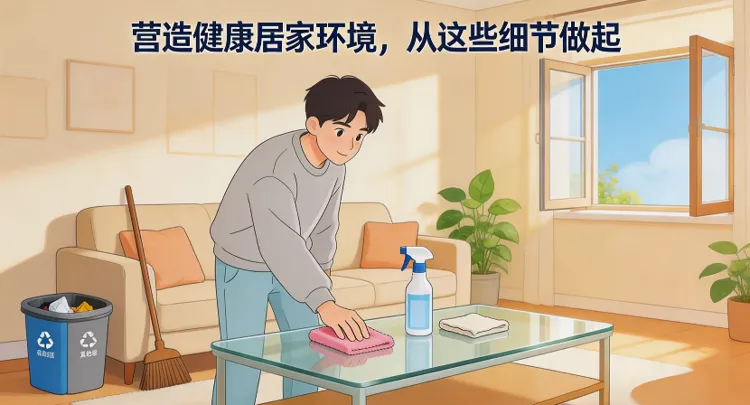
Title: How to Create a Healthy Home Environment: Key Tips Profile: A healthy home reduces the risk of diseases. It addresses changes in ventilation, cleaning, light, and noise to improve health. Keywords: ['Home Health', 'Environmental Optimization.'] Author: N/A Reviewer: N/A Commissioner: N/A Production Organization: N/A
A healthy home is crucial for our health. It not only allows us to live comfortably and peacefully but also effectively reduces the risk of diseases. Creating a truly healthy home is not complicated; the key is to pay attention to the details that are often overlooked. Let us explore how to address this matter from different perspectives to achieve a healthy and safe home environment.
1. Keep indoor air fresh.
(1) Scientific ventilation, optimization of indoor air.
Develop the habit of ventilating regularly by opening windows 2 to 3 times a day for 15 to 30 minutes each time. Priority should be given to times when the outdoor air quality is good, avoiding periods of intense air pollution and dust. When ventilating, open opposite windows and doors to create a cross-ventilation that improves efficiency. When temperatures are low, a small crack can be opened briefly to balance air exchange and maintain stable indoor temperature.
(2) Control pollutants and reduce harm at the source.
When renovations are done and choosing furniture, it is preferable to opt for low-emission and eco-friendly materials. It is advisable to wait for the newly remodeled space to be well-ventilated before moving in. The use of chemicals like air fresheners and insecticides should be reduced, and smoking indoors should be avoided to prevent exposure to secondhand and thirdhand smoke. It is also important to periodically clean and replace the filters of air conditioners and air purifiers to avoid the accumulation of dust and the proliferation of microorganisms.
2. Scientific cleaning: maintain hygiene at home.
(1) Cleaning key areas: precise reduction of germ proliferation.
Bedding, duvet covers, and pillowcases should be washed regularly with hot water of over 55°C, as heat can effectively eliminate dust mites and their droppings. Items that cannot be washed in machines, like duvets, pillow cores, and mattresses, should be exposed to sunlight periodically to dry completely. Ultraviolet light and the sun's heat help disinfect and eliminate mites. After sun drying, it is recommended to shake them to remove surface dust, keeping them dry and fluffy.
Kitchen: Eliminate sources of mold and bacteria.
Utensils and kitchen tools should be washed and dried immediately after use to avoid moisture buildup that promotes bacterial proliferation. It is recommended to disinfect tools like cutting boards and knives, which come into direct contact with food, using boiling water or food-grade disinfectants regularly. Additionally, damp areas like under the kitchen sink and the crevices in corners should be dried with a dry cloth after each use to maintain dryness.
Bathroom: Maintain ventilation and disinfect regularly.
After showering, it is advisable to turn on the air extractor or open the windows to reduce interior humidity and decrease mold growth. In areas of high contact like the toilet and sink, it is suggested to disinfect weekly with a chlorine-based disinfectant (like disinfectant 84, diluted according to instructions). It is also important to regularly clean hair and dirt from drains and corners where water can easily accumulate to avoid unpleasant odors and bacterial proliferation.
(2) Cleaning and dust removal standards: avoid dust lifting and keep the environment clean.
It is recommended to use a slightly damp cloth to remove dust, as this helps to absorb it without lifting it. In areas such as the floor, the sofa, and under the bed, using a vacuum cleaner is preferable to eliminate dust, thus reducing suspended air contaminants.
Home cleaning often overlooks places like under the bed, the tops of cabinets, and the tracks of doors and windows. These spots accumulate dust and items over time, which can favor bacterial proliferation. It is recommended to clean them at least once a month.
Domestic waste should be classified and cleaned promptly to avoid long-term accumulation, thus preventing the generation of unpleasant odors and the proliferation of mosquitoes and bacteria.
3. Create a comfortable environment in terms of temperature, humidity, sound, and light.
(1) Maintain appropriate temperature and humidity.
In winter, indoor temperature should be kept between 18 and 22°C, and in summer between 24 and 28°C, avoiding direct airflow from air conditioning on the body. Indoor relative humidity should be maintained between 40% and 60%; high humidity can promote the proliferation of mold and mites, while low humidity can lead to dry mouth, dry skin, and sensitivity in the respiratory tract. Humidity can be adjusted using dehumidifiers or humidifiers according to the season, in combination with a hygrometer for precise control.
(2) Lighting optimization and noise reduction.
According to indoor lighting conditions, lighting should be arranged reasonably to ensure that in visual tasks such as studying and reading, the light is sufficient and evenly distributed, avoiding overly dark light or glare. In the bedroom, it is advisable to use warm-colored light sources to create a relaxing atmosphere, and reduce exposure to bright lights and electronic screens before sleeping. At the same time, the environment should be kept quiet, choosing low-noise appliances and placing them appropriately, closing doors and windows to decrease external noise and controlling the volume of audio and video, to create a tranquil and comfortable environment for rest and sleep, thus minimizing the impact of light and sound on physical and mental states.
4. Pay attention to the safety of household products.
Choose furniture that meets safety standards and avoid furniture edges with sharp corners to prevent bumps and injuries. In homes with children, protective strips and socket covers can be installed as safety measures; also, medications, cleaning agents, and other hazardous objects should be stored out of the reach of children to prevent accidental ingestions or unintentional contacts.
#salud en el hogar
#optimización del entorno.



© 2025 Tribu Salud.