
mitos sobre la radiación que te rodea y la verdad detrás de ellos
mar 09, 2026
Title: Myths About Radiation That Surrounds You and the Truth Behind Them. \nContributor: Chongqing Association of Scientific Communication Writers. \nAuthor: Qianjiang District Municipal Center for Disease Control and Prevention Team, Senior Engineer Wang Haitao; Yongchuan Red Cross Health and Education Volunteer Service Team (Master Zou's Knowledge Garden), Technical Chief Zou Jingbo. \nExpert Reviewer: Li Hanbin. \nStatement: Except for original content and special specifications, some images are from the Internet, intended for non-commercial use, and are solely for scientific dissemination. Copyright belongs to the original authors. If there is any infringement, please contact us for removal.
In daily life, when mentioning "radiation," many people immediately think of nuclear weapons or nuclear accidents, as if radiation is always associated with danger, disease, and even mutations. However, radiation does not only exist in those extreme events. Every day we live in a natural radiation environment; even sunlight, soil, and the bananas we consume contain small amounts of radiation. Modern medical examinations, such as X-rays or CT scans, also expose us to radiation. So, is radiation really that frightening? The key lies in scientific understanding and proper protection.
Natural radiation is present everywhere.
The Earth itself is a massive source of radiation. Natural radiation primarily comes from:
Cosmic Rays: High-energy particles that come from outer space.
Terrestrial Radiation: Naturally occurring radioactive elements such as uranium, thorium, and radium found in soil and rocks.
Internal Radiation: Radioactive isotopes like potassium-40 present in the human body.
According to data from UN-related agencies, the natural radiation dose received by each person in the world annually is approximately 2.4 millisieverts, nearly half of which comes from radon gas, a naturally occurring radioactive gas found in soil and building materials.
Medical Radiation: Balancing benefits and risks.
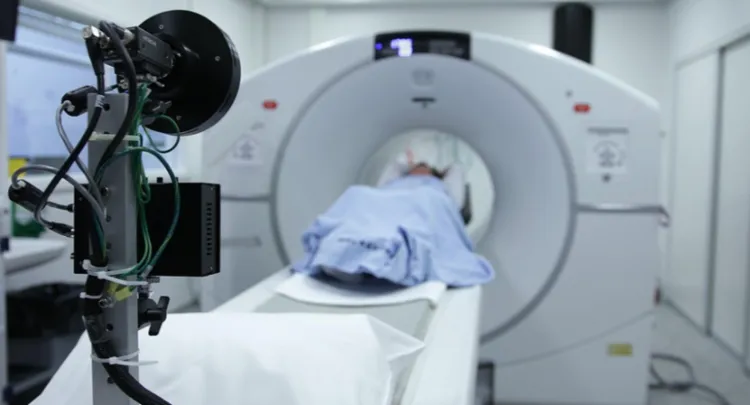
Medical radiation is the main way humans are exposed to artificial radiation. The radiation dose from a chest X-ray is approximately 0.1 millisieverts, equivalent to around 10 days of natural background radiation; meanwhile, the dose from a CT scan is higher, approximately between 1 and 10 millisieverts.
It is worth emphasizing that the use of medical radiation strictly follows the principles of "justification" and "optimization." Doctors will weigh the diagnostic value of examinations against potential radiation risks based on patient needs and will use the lowest possible dose to acquire necessary information.
Source of the image: Pixabay.
Common protective knowledge in daily life includes the following points: 1. Personal hygiene: Wash hands frequently, especially before eating and after using the toilet, thoroughly wash hands with soap and water. 2. Safe diet: Ensure food is fresh, avoid raw foods, especially meat and seafood, and ensure food is fully cooked. 3. Fire safety: Install smoke alarms at home, regularly check electrical wiring, avoid overloading sockets, and develop a habit of checking for fire sources before leaving home. 4. Traffic safety: Pay attention to traffic signals while walking, wear safety helmets while cycling or driving, and fasten seatbelts; do not drive under the influence. 5. Natural disaster preparedness: Understand the natural disaster risks in the area, prepare emergency supplies such as food, water, and first aid kits in advance, and develop an escape plan. 6. Mental health: Value mental health, engage in appropriate mental counseling, seek professional help when necessary, and maintain good interpersonal relationships. By following these common practices, we can better protect ourselves and others in daily life.
Home environment.
Maintain indoor ventilation to reduce the risk of radon buildup, especially in basements and ground floors.
Understand the radioactivity levels of construction materials and choose wisely.
Some smoke detectors use radioactive americium-241 and must be disposed of according to the instructions.
Medical examinations.
Proactively inform the doctor about previous medical radiation exposure history.
Pregnant women and children should avoid exams involving radiation as much as possible unless strictly necessary.
Protective devices, such as lead aprons, can be used during checks.
Daily habits.
Use mobile phones moderately and avoid long calls holding the phone tightly against your ear.
When the microwave is in operation, maintain a safe distance of 0.5 to 1 meter.
When flying, cosmic radiation increases at high altitudes; however, for regular passengers, the risk associated with typical flight durations is very low.
Occupational protection.
For professionals in fields such as medicine and the nuclear industry, protective requirements are stricter, including wearing personal dosimeters, following operational procedures, and undergoing regular training and health checks.
Avoid common distractions.
Myth one: "All radiation is dangerous."
Facts: In everyday life, most radiation to which we are exposed is non-ionizing (such as from mobile phones and Wi-Fi), which has lower energy and will not damage DNA. Ionizing radiation (such as X-rays and gamma rays) is what truly requires special protection.
Source of the image: Pixabay.
Myth two: "A single X-ray can cause cancer."
Fact: The radiation dose from a single medical scan is very low, and the cancer risk it may pose is much smaller than the diagnostic value provided by the exam.
Myth three: "Radiation protective clothing can block all radiations."
Facts: The protective clothing against electromagnetic radiation sold on the market is primarily designed for that type of radiation, and its effectiveness in protecting against ionizing radiation is limited. It is important to have a rational understanding of its function and avoid developing unnecessary psychological dependence.
Conclusion.
Radiation is like fire; if controlled properly, it can bring enormous benefits to humanity; if it gets out of control, it can cause harm. The goal of radiological health is not to instill fear, but to help us understand radiation scientifically and learn to coexist harmoniously with it. Through correct knowledge, reasonable protection, and proper management, we can safely enjoy the benefits that radiation technology brings to medicine, energy, and research while minimizing risks.
I hope the next time you undergo a medical examination or use an electronic device, you do so with a calmer and more rational attitude towards this "invisible companion that is everywhere."
#conocimientos de salud.
#divulgación científica.


© 2025 Tribu Salud.