
¿Por qué duele el hombro? Todo sobre los ataques de gota
mar 15, 2026

Production: China Popular Science
Authors: Mai Bo, Hu Yingyi, Sun Qianbing
Producer: Guangdong Provincial Association for Science and Technology.
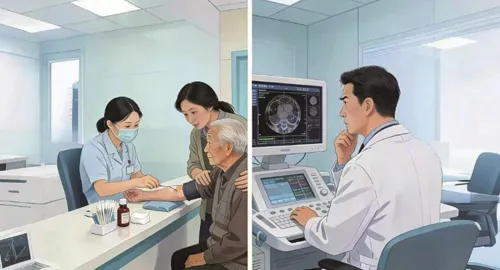
Mr. Chen is 62 years old and has suffered from diabetes for 5 years, with overall control of his blood glucose. A month ago, while doing housework, he suddenly felt pain in his right shoulder joint. He thought it might be a case of arthritis in the shoulder and decided to rest without paying much attention. However, a week later, the pain returned. Despite receiving physical therapy treatment for several days, the pain in the joint not only did not improve but worsened to the point where he found it difficult to lift his arm. He realized the situation was serious and feared it might be a joint complication related to his diabetes, so he immediately went to the endocrinology department of the Guangzhou Red Cross Hospital.
The doctor in charge of Mr. Chen quickly organized related examinations, such as biochemical analyses and X-rays of the shoulder joint. The results of the blood tests showed that Mr. Chen's uric acid level reached 509 umol/L, and the X-ray revealed the presence of a high-density image in the shoulder joint. After taking common analgesics, the pain in the shoulder did not improve significantly. Based on his years of clinical experience in treating gout, the attending physician did not rule out the possibility of gouty arthritis and scheduled a very relevant specific examination: dual-energy computed tomography. The results of the test soon identified the cause of the problem: uric acid crystals hidden deep within the joint! After adjusting the anti-gout medication, Mr. Chen's condition was quickly brought under control.
Gout has become a modern disease and can affect any joint.
Dr. Chen Guangshu, an endocrinology specialist at the Guangzhou Red Cross Hospital, noted that due to dietary diversity and lack of exercise, many people find their blood uric acid levels elevated to varying degrees during medical check-ups. Recent studies show that the prevalence of hyperuricemia in our country reaches 13.3%, and about one-third of people with high uric acid levels will experience gout episodes. The most commonly affected areas by gouty arthritis are generally the big toe, in addition to the top of the foot, the ankle, and the knee.
The pain accompanying a gout attack is truly memorable. In the early stages of the disease, the pain may not be so intense, but over time, uric acid crystals accumulate in the joints, causing deformities of varying degrees. As a gout attack progresses, the pain becomes increasingly sharp. According to reports, joints such as shoulders, hips, and the spine are less prone to harbor uric acid crystals due to their rich vascularization and the relatively high pH of the joint fluid, making it less common for gout attacks to occur in these areas. However, the considerable number of people at risk for gout has led to a diversification in the locations of gouty arthritis. There are few reports of gout in these areas, and one important reason is that doctors from different specialties do not have a deep understanding of the disease, and the lack of widespread access to dual-energy computed tomography can lead to numerous diagnostic and treatment errors.
Many patients with high uric acid and shoulder and neck pain may have an underestimated probability of developing gouty arthritis in the shoulder joint. Literature mentions that the deposition of uric acid crystals in the shoulder joint may lead to secondary ligament damage or calcification, which increases treatment difficulty and reduces treatment effectiveness. Therefore, early identification and timely effective treatment are particularly important.
Management of gout is underway and requires attention.
To improve the diagnosis, differentiation, and management of patients with gout, the Department of Endocrinology and Metabolism at the Guangzhou Red Cross Hospital, in collaboration with the Radiology Department, has developed a spectral analysis technique for gout in the joints using dual-energy computed tomography (CT). Dual-energy CT is a non-invasive imaging test that can detect and clearly show gout nodules, making it a preferred option for investigating shoulder joint pain associated with hyperuricemia. Of course, shoulder pain caused by gout must also be differentiated from other shoulder pathologies, such as adhesive capsulitis, rheumatoid arthritis, ligament injuries, among other diseases.
Chen Guangshu recalls that when blood uric acid levels are elevated for a long time and severe pain occurs in a single shoulder joint or other joints, it is advisable to consult a specialist in endocrinology and gout to avoid overlooking gouty arthritis.
Five misconceptions about gout treatment 1. Over-reliance on medication: Many people think gout can be cured only with medication, but in reality, lifestyle adjustments, such as dietary control and moderate exercise, are equally important. 2. Ignoring dietary management: Some patients believe that as long as they take medication, there is no need to pay attention to their diet. In fact, avoiding high-purine foods (such as seafood, red meat, etc.) is crucial for controlling gout attacks. 3. Thinking that medication can be stopped once pain subsides: Some patients stop taking medication after symptoms disappear, which can lead to gout recurrence. Treatment should be continued based on the doctor's recommendations. 4. Misunderstanding uric acid levels: Some individuals believe that once uric acid levels are normal, there’s no problem, but gout patients may still experience flare-ups even with normal uric acid levels, so regular monitoring is necessary. 5. Neglecting water intake: Many patients do not sufficiently prioritize maintaining proper hydration, but adequate fluid intake helps eliminate uric acid and reduces the risk of gout attacks. Understanding these misconceptions can help gout patients better manage their health.
Error one: Gout is not that serious, as many people have it; just take a little analgesic and everything will be fine.
Studies have shown that hyperuricemia often occurs alongside other metabolic diseases, such as diabetes and hypertension. Among these, one of the most severe is uric acid nephropathy. Once this kidney disease occurs, repeated use of analgesics can easily lead to a deterioration of kidney function. In turn, worsened kidney function can exacerbate gout episodes, creating a vicious cycle.
Error number two: Medications to reduce uric acid can damage the liver and kidneys, so it is better not to take them unless necessary and to reduce their use as much as possible.
Long-term hyperuricemia and gouty stones can lead to kidney damage. Although uric-lowering drugs do carry a risk of causing liver function abnormalities, this probability is relatively low. Under close monitoring, if these adverse reactions occur, they can be actively managed in a timely manner, so there is no need to worry excessively.
Error number three: If seafood is not eaten, gouty arthritis will not occur.
The main cause of hyperuricemia is the liver's insufficient enzymatic activity to metabolize uric acid or decreased kidney capacity to excrete uric acid, leading to its accumulation in the blood. Therefore, dietary contribution to hyperuricemia is at most 20%. Hence, we say it is challenging to reduce elevated uric acid levels solely through dietary control.
Error four: Febuxostat is a panacea for gout treatment, and it surely can control gout episodes.
Some individuals still have high blood uric acid levels after taking febuxostat; this may be due to genetic mutations in renal uric acid transport proteins leading to excessive tubular reabsorption of uric acid, thus causing hyperuricemia. If febuxostat does not yield satisfactory results, genetic testing related to gout or hyperuricemia risk can be considered for precision treatment.
Error five: There is no need to take long-term medications for gout, as long as uric acid drops, it is sufficient.
Standard treatment for gout is very important; medication should not be interrupted on one's own, as this can lead to recurrent arthritis and kidney damage, resulting in more problems than benefits.
Five points to note for gout patients: 1. Dietary control: Avoid high-purine foods, such as red meat, seafood, and certain fish, and increase the intake of low-purine foods, such as vegetables and whole grains. 2. Keep hydrated: Drinking plenty of water helps dilute uric acid, so it is recommended to consume sufficient fluids daily to promote uric acid excretion. 3. Moderate exercise: Engaging in regular moderate exercise can help control weight and reduce the risk of gout attacks. 4. Avoid alcohol: Alcohol, especially beer and spirits, increases uric acid levels, so it is advisable for gout patients to limit or reduce alcohol consumption. 5. Regular monitoring: Regular checks of uric acid levels, timely communication with doctors, and adjustment of treatment plans are crucial to control disease progression.
1. Package for gout treatment:
Seafood, beer, and grilled food are items that should be avoided or consumed in small amounts if suffering from gout.
2. Keep away from offal and red meat.
Animal-derived purines are more likely to elevate uric acid levels compared to plant-derived purines. It is recommended to consume red meat, offal, and related processed products no more than twice a week. Foods like mushrooms, cauliflower, and spinach can be consumed normally.
3. Exercising to lose weight is fundamental.
Regular aerobic exercise can effectively control weight and reduce gout episodes.
4. Juice beer should not be consumed excessively:
Drink fewer fructose-containing beverages, less beer, and fewer long soups.
5. Milk coffee helps:
Daily intake of 250 ml of milk can reduce the risk of gout by 50% in men. Low-fat milk, yogurt, and coffee can help lower uric acid levels.
Content provided by: Guangdong Provincial Association for Science and Technology.
The content and resources are provided by the project unit.
The cover image of this article comes from a copyright image library.
Reproduction may lead to copyright disputes.
#salud y divulgación científica


© 2025 Tribu Salud.