
¿La salud mental mejora con un chequeo médico? Descúbrelo
mar 15, 2026
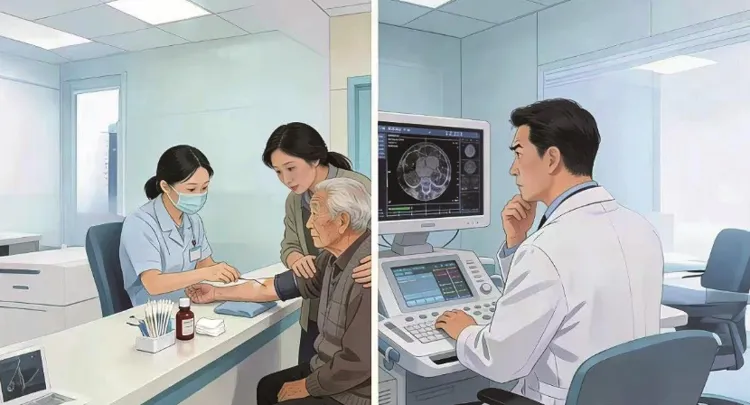
Title: Does Mental Health Improve with a Medical Checkup? Find Out. Profile: The piRNA technology predicts mortality risk in older adults through blood analysis, enhancing health reviews. Author: Chen Jie.
It only takes a blood sample to determine if the body will show warning signs in the coming years. This expectation, which sounds like science fiction, is gradually becoming a reality thanks to the latest scientific discoveries.
Researchers at Duke University Medical Center in the United States have discovered that a class of small molecules called piRNA in human blood can serve as precise 'health alert signals,' predicting short-term survival risk in older adults.
The results of the related research were recently published in the international journal 'Cells of Aging'.
The role of "micro-managers" in the blood has been investigated.
Determining whether an older person faces health risks in the coming years has been a challenge in the medical field.
Typically, doctors conduct a comprehensive evaluation using indicators such as age, blood pressure, cholesterol levels, lifestyle habits, and physical activity. However, these indicators are sometimes not very sensitive.
The researchers decided to change their approach and focus on an extremely small class of molecules in the blood: piRNA.
These small molecules play the role of diligent 'micro-managers' in the body, overseeing development, immunity, tissue repair, and other functions, and tend to go unnoticed.
The researchers analyzed blood samples from over 1,200 seniors aged 71 and older, examining 828 types of small RNA and 187 clinical data points, while also utilizing artificial intelligence and machine learning to assist in modeling. The results were surprising.
Only six types of piRNA are needed to predict with 86% accuracy the survival of seniors in the next two years.
The researchers also compared this with over 180 common indicators, finding that piRNA directly surpasses traditional indicators like age, lifestyle habits, cholesterol, and physical fitness tests.
In other words, piRNA is more adept at capturing the early signals emitted by the human body than the medical data that doctors typically focus on.
The research also found that lower levels of certain piRNA correlate with longer and healthier lifespans; reducing levels of these molecules may genuinely help prolong life.
Researchers speculate that piRNA are not just 'markers' of aging but could also play a role in regulating longevity by recording health changes and issuing warnings at critical moments.
The future of elder care may become more scientific.
Experts believe the significance of this achievement goes far beyond the simple term 'prediction'.
Imagine a day in the future when we go to the hospital for a checkup; in addition to routine blood tests and liver function tests, doctors will also suggest checking these six piRNA indicators.
A single blood sample could provide a 'prediction' of health risks in the years to come.
If results are not very satisfactory, it could serve as a 'warning sign' sent by the body.
This does not mean that we will necessarily become ill, but it reminds us to pay closer attention to our health.
Based on this early warning, doctors will be able to identify high-risk populations for health issues earlier, allowing them to tailor specific interventions such as more detailed special examinations, targeted dietary and exercise recommendations, or even new preventive medications.
This means that the future of retirement could become more scientific and personalized.
Of course, researchers have also found that when predicting long-term survival, factors such as lifestyle habits begin to have a significant impact. PiRNA, this 'short-term prophet,' is indeed impressive, but a healthy lifestyle remains our 'guardian of longevity' throughout life.
Currently, this research is in its early stages, but its potential for application is very appealing. These tiny molecules hidden in the blood are transforming the beautiful wish of 'aging healthily' into a reality that can be foreseen, safeguarded, and achieved in everyday life.
Perhaps in the not-so-distant future, a simple blood test will help older adults anticipate health risks, allowing them to enjoy a more peaceful and secure old age.
(Report from the popular science newspaper by Chen Jie)
#salud
#ciencia y tecnología


© 2025 Tribu Salud.