
nueva investigación refuta la creencia sobre el agua y los cálculos renales
mar 29, 2026
Compilation: Gao Jie
Severe pain in the lower abdomen, difficulty sitting or standing, and even pain so sharp that it prevents maintaining an upright position are the nightmare of many patients with kidney stones. As one of the most common diseases of the urinary system, kidney stones not only cause unbearable suffering during attacks but also have a high recurrence rate.
For a long time, "drinking more water" has been regarded as the core principle for preventing the recurrence of kidney stones, but is this claim scientifically valid?
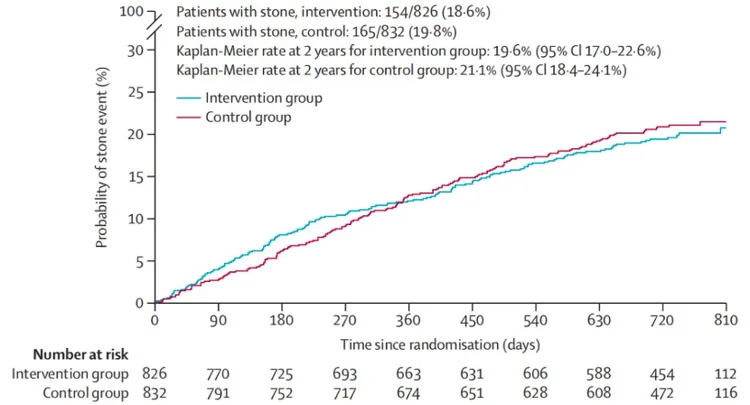
On March 21, the prestigious international medical journal "The Lancet" published the largest hydration intervention study to date regarding kidney stones, which shows that even by increasing water intake and urine output through intervention, the recurrence rate of kidney stones could not be reduced.
This PUSH (Prevention of Urinary Stones with Hydration) study was conducted at institutions such as Washington University in St. Louis and included 1,658 participants over the age of 12 with a history of urinary stones and a 24-hour urine volume below established standards. Of these, 66.6% were patients with recurrent stones who suffered from frequent relapses, and the study period extended over 2 years.
The study utilized a 1:1 randomized assignment design with a double-blind approach. A total of 826 individuals were assigned to the intervention group, where they received multiple behavioral interventions, including personalized hydration prescriptions, guidance from a health coach, and the use of smart water bottles, aimed at improving overall adherence to fluid intake. On the other hand, 832 individuals were assigned to the control group, which received hydration recommendations according to clinical standards, without any additional intervention.
The core observation indicators of the study were the recurrence of symptomatic stones during the 2-year follow-up period, including stone passage and events requiring surgical or medical intervention. Additionally, indicators such as 24-hour urine volume, stone imaging changes, and adverse reactions would also be monitored.
The amount of urine increased, but the risk of stone recurrence did not decrease.
After a median follow-up of 738 days (approximately 2 years), the study results showed that the 24-hour urine volume in the intervention group was significantly higher than that of the control group, indicating that these interventions helped patients increase their water intake, addressing the adherence issue of "not drinking enough water."
However, the most critical core result shattered traditional beliefs: the percentage of recurrence of symptomatic stones in the intervention group was 18.6% (154 individuals), while in the control group it was 19.8% (165 individuals), with no statistically significant differences between the two groups. In summary, although patients were made to drink more water and urine volume increased, the likelihood of stone recurrence did not decrease.
Moreover, imaging results also showed that the proportion of patients in both groups with new stones or an increase of ≥2mm in existing stones showed no differences.
Regarding safety, throughout the study there were no cases of hyponatremia (water intoxication) requiring hospitalization. Only 1% of the intervention group (12 people) experienced asymptomatic hyponatremia, while in the control group it was less than 1% (2 people). This indicates that the intervention approach is generally safe, although it has yet to provide benefits in preventing relapses.
One cannot solely rely on "drinking more water."
It is noteworthy that this study does not deny the role of water consumption, but rather overturns the inherent notion that "drinking more water can prevent stones," offering important directions for clinical practice and future research.
The PUSH study clearly indicates that even with increased urine output, simple hydration is not sufficient to prevent the recurrence of kidney stones. This is because the mechanism of stone formation in the kidneys is very complex and related to various factors, such as calcium, oxalate, and uric acid concentrations in urine, metabolic abnormalities in the body, and dietary habits, thus cannot be resolved merely by diluting the urine.
For patients with kidney stones, it is essential to ensure adequate fluid intake in their daily lives, especially for those with very low urine production. Moderate hydration may help alleviate urine concentration, but one should never place all hope on "drinking more water." Excessive and indiscriminate fluid consumption can increase the burden on the body. For patients with recurrent kidney stones, it is crucial to investigate metabolic abnormalities and dietary structure in a timely manner. Following personalized recommendations from specialized doctors is key to preventing the reappearance of kidney stones.
For clinicians, this study sends a warning: in the future, more precise individualized interventions are needed rather than solely advocating "drinking more water" to help patients avoid the pain of stone recurrence.
#salud
#salud renal


© 2025 Tribu Salud.