
puedes comer comida sobrante de la noche anterior si sigues estos consejos de seguridad alimentar
abr 06, 2026
Title: You Can Eat Leftover Food from the Night Before if You Follow These Food Safety Tips Author: Not specified Reviewer: Not specified Commissioner: Not specified Production Information/Organization: Not specified
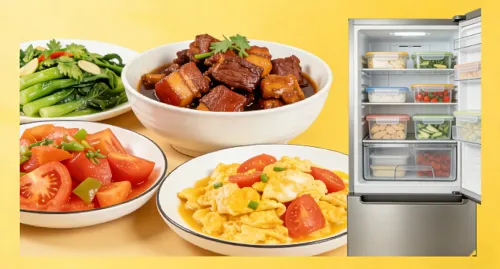
"Leftover food from the night before" is something every family has faced. Throwing it away seems wasteful, but eating it raises concerns about its safety. There are various opinions online that further complicate the issue: some say leftover food can cause cancer, while others claim it's perfectly fine. So, can you really eat the leftover food? In fact, many people misunderstand the concept of 'the night before.' The key lies in how it's stored, the type of ingredients, the duration of storage, and whether it has spoiled. Understanding these aspects allows for a scientific judgment and enables one to enjoy the food without worry.
One clarification of misunderstandings: it does not become toxic overnight; the risk lies in the details.
Many consider 'one day to the next' as a safety line, which is a significant misunderstanding. In reality, 'one day to the next' simply indicates that a considerable amount of time has elapsed since storage, typically over 8 hours, which increases the likelihood of risk but definitely does not mean that being 'one day old' is toxic. It refers more to the situation where food has been stored at room temperature or in the refrigerator for a certain period before being consumed again. In other words, dishes cooked in the morning and consumed at night also carry risks. Therefore, the key to determining if leftovers are safe to eat is not whether they have passed the night, but 'how long they have been stored and how they have been stored.'
2. Safety judgment: Four criteria.
(1) Observe the storage method.
Leftover food that cannot be finished does not need to wait to cool completely; it is advisable to pack and seal it as soon as possible and place it in the refrigerator within 2 hours. The temperature between 4°C and 60°C is the 'danger zone' where bacteria rapidly multiply; the longer they are left at room temperature, the more bacteria will accumulate.
Use clean storage containers and plastic wrap to seal, avoiding odor transfer and cross-contamination.
Dividing into small portions allows for quicker cooling and reduces contamination from repeated opening.
The refrigerator temperature should be kept below 4°C, and raw and cooked foods should be kept separate.
It is recommended to store rice separately and not mix it with leftover soup.
(2) Observe the type of ingredients.
Ingredients that are not recommended to be stored overnight include: 1. Seafood: such as fish, shrimp, and crab, prone to spoilage, affecting taste and texture. 2. Chicken and poultry: uncooked chicken left overnight may breed bacteria. 3. Tofu: may emit odors and spoil if stored overnight. 4. Rice: especially when stored at room temperature, may breed bacteria. 5. Vegetables: some fresh vegetables like lettuce and cucumber lose freshness and texture overnight. 6. Prepared foods: if not properly stored, they are likely to breed bacteria and cause food poisoning. It is best to consume them on the same day to ensure food safety and health.
Leafy green vegetables (like spinach, rapeseed, and oil lettuce) have a high nitrate content, and after sitting overnight, the nitrite content significantly increases, besides losing much of their nutritional value.
Freshwater seafood and fish: proteins easily break down, allowing bacteria proliferation and the production of histamines and other harmful substances, potentially causing allergies and poisoning.
Cold salads and marinated foods: during preparation, they are prone to contamination, as they are not subjected to high-temperature heating to sterilize them, which poses a high risk if consumed the next day.
Soft-boiled and semi-cooked eggs: if not cooked thoroughly, they may retain bacteria like Salmonella, which can multiply significantly overnight and are difficult to eliminate entirely.
Rehydrated ear fungus and silver ear fungus: if stored for long periods, they may proliferate Pseudomonas cocovenens, which produces deadly toxins.
Ingredients that can be briefly refrigerated include: 1. Fresh vegetables (e.g. tomatoes, lettuce, cucumber) 2. Fruits (e.g. apples, oranges, grapes) 3. Dairy products (e.g. milk, yogurt, cheese) 4. Raw meats (e.g. chicken, beef, pork) 5. Fish and seafood (e.g. shrimp, fish fillets) 6. Eggs (e.g. chicken eggs) 7. Whole grains (e.g. oats, rice) 8. Cooked foods (e.g. ham, sausage) These ingredients can stay fresh under refrigeration but are generally recommended to be used within a week.
Root vegetables and tubers (like potatoes, turnips, zucchini, and eggplants) have stable properties and show a slow increase in nitrites.
Meats and eggs (well-cooked): stable nutrition, low risk after thorough cooking.
Staple foods like rice and steamed bread should be stored in a sealed container in the refrigerator and consumed within 24 hours for greater safety.
(3) Check the storage duration.
Leftover food should be consumed within 24 hours for optimal taste and quality and should not be stored for more than 48 hours.
Storage at room temperature: regardless of the food, consumption is not recommended if it has been out for more than 2 hours. On hot days (above 32°C), it should not exceed 1 hour.
Repeated reheating: Only heat the leftovers once, eat only what you need. Reheating multiple times accelerates spoilage and causes nutrient loss.
(4) Check for changes in quality.
Before eating, make sure to check. If any of the following situations arise, no matter how unfortunate, do not eat it:
Odor: sour, unpleasant, foul smell.
State: sticky, stringy, cloudy broth, moldy; the rice is sticky and clumpy, with a decomposition smell.
Color: evident change, opaque; the rice is yellowish and gray.
Three, proper consumption: doing this step correctly provides greater peace of mind.
Leftovers from the night before should not be consumed without fully reheating them before eating.
Stir-frying and stewing: stir-fry at high temperature or steam until the center reaches over 70°C.
Soup: boil and maintain for 3-5 minutes.
Leftovers: add a little water to break them apart, steam or boil well to avoid being hot on the outside but cold on the inside.
Microwave heating: rotate halfway through to ensure even heating.
Fourth, final warning.
From a health and savings perspective, cooking and consuming food at the moment is the best choice, as it avoids nutrient loss and food safety risks. When it comes to leftovers, as long as the principles of "refrigerate timely, store by categories, control time, heat completely, and discard if spoiled" are followed, they can be consumed with peace of mind, without the need to panic blindly.
#seguridad alimentaria
#nutrición y salud


© 2025 Tribu Salud.