
descubre por qué algunas cirugías pequeñas son más complicadas de lo que crees
abr 08, 2026
Author: Zhang Dan, Chief Nurse of the Thoracic Surgery Department at Chongqing Medical University Hospital, and Zou Jingbo, Chief Technician of the "Scientific Dissemination Garden" at the Yongchuan City Center for Disease Prevention and Control, expert (Popular Science Expert of China). Reviewers: Zhang Hong and Luo Yang from the Chongqing Association of Science and Technology (China Science and Technology Experts). Collaboration Entity: Chongqing Scientific Dissemination Research Association. Statement: Except for original content and special instructions, some images come from the Internet, are for non-commercial use, and are used only as material for scientific dissemination. Copyright belongs to the original authors; if there is any infringement, please contact us to remove the content.
Many people mistakenly believe that minimally invasive surgery is simply a small operation, with straightforward procedures and low risk. However, with the broad application of minimally invasive technology in fields such as thoracic surgery, it indeed can reduce trauma and accelerate recovery, but minimally invasive surgery requires a high level of technical skills, equipment, and clinical experience. Its complexity and challenges should not be underestimated; it is not something that can be performed randomly. Each minimally invasive surgery demands that all involved physicians maintain a balance between precision and safety during delicate technical procedures, meaning that it is actually not simple at all.
Minimally invasive surgery is a type of surgical operation performed through small incisions or natural orifices, aimed at minimizing damage to the body and recovery time. This type of surgery often uses high-tech equipment, such as endoscopes, to achieve more precise operations.
Definition and characteristics of minimally invasive surgery.
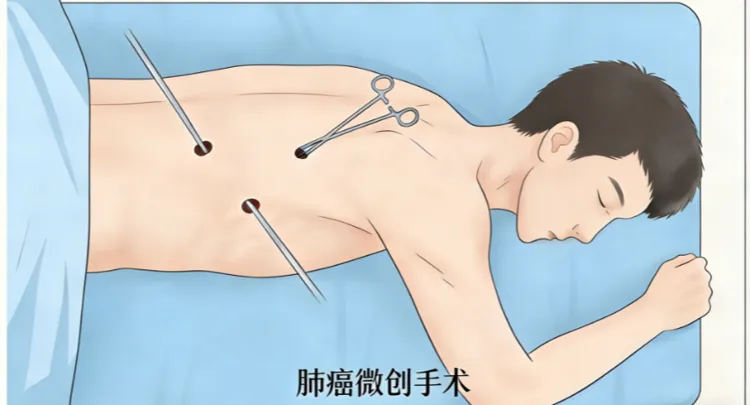
Minimally invasive surgery, as its name suggests, is performed through small incisions in the human body, utilizing advanced technology and equipment. Its most notable feature is the "smallness": small incisions, less trauma, and quicker recovery. While traditional surgery often requires large cuts into the body, minimally invasive surgery employs high-tech equipment such as endoscopes, lasers, and robots, allowing procedures to be performed through incisions the size of a small hole or puncture. This not only reduces the risk of bleeding and infection but also enables faster recovery and shorter hospital stays for patients. In summary, minimally invasive surgery makes treatment more precise and comfortable.
Differences between minimally invasive surgery and traditional surgery.
Traditional surgery typically requires larger incisions for the physician to observe and operate directly on the affected area. Although this method is more intuitive, it involves significant trauma, a slower recovery process, and a higher risk of complications. In contrast, minimally invasive surgery uses advanced imaging equipment (such as thoracoscopes, laparoscopes, and others) to perform "major procedures through small holes." Guided by high-definition images, physicians can operate precisely without the need for large incisions. As a result, patients experience less postoperative pain, a reduced risk of infection, and a smoother recovery process. Therefore, minimally invasive surgery has become the preferred technique in various fields such as thoracic and oncological surgery.
Application of minimally invasive surgery in thoracic surgery.
Thoracic surgery often involves vital organs such as the heart, lungs, and pleura. Traditional surgical techniques are often invasive and place a significant burden on patients. Minimally invasive surgery compensates for this disadvantage. Whether in lung cancer resection, biopsy of lung masses, or cardiac interventions, minimally invasive technology allows for more accurate and less aggressive treatment. For example, in thoracoscopic-assisted lung surgery: through small incisions and high-precision imaging, the physician can safely remove affected tissue, thus alleviating patient suffering and reducing recovery time.
The operational complexity of minimally invasive thoracic surgery.
Minimally invasive surgery is not a simple procedure.
Although minimally invasive surgery seems less traumatic, it is not a straightforward operation that can be performed casually. The complexity of thoracic surgery implies that minimally invasive procedures require an extremely high technical level and very precise equipment support. Physicians must not only perform the operation through small incisions but must also use high-definition imaging systems for precise navigation. A small mistake during the procedure can jeopardize patient safety. Therefore, minimally invasive surgery demands that physicians possess outstanding professional skills and a deep understanding and mastery of complex thoracic anatomy.
Technical requirements for minimally invasive thoracic surgery.
Minimally invasive thoracic surgery requires a high level of technical support. During the procedure, surgeons use equipment such as endoscopes and robotic surgical systems to perform precise cuts or sutures. These devices require real-time imaging monitoring to ensure smooth handling in confined spaces. Taking robotic surgery as an example, the surgeon controls the mechanical arms from a console, allowing operations to be carried out with millimeter precision and considerably reducing damage to surrounding healthy tissues. For surgeons, it is crucial not only to master these high-tech devices but to also have rich clinical experience to handle various unforeseen situations during surgery.
Challenges of complex pathology in minimally invasive surgery.
Minimally invasive surgery can reduce trauma but still faces significant challenges in cases of complex diseases. For instance, in patients with lung cancer, due to the special location of the tumor or the complexity of the condition, surgery requires an extremely high level of precision to ensure complete removal. When treating diseases in the thorax, the operating space in minimally invasive surgery is very limited. Thus, physicians must possess exceptional precision, ensuring that essential blood vessels, nerves, and trachea are not damaged. It can be seen that while minimally invasive surgery entails less trauma, its difficulty in complex situations is very high and cannot be undertaken lightly.
Safety and risks of minimally invasive thoracic surgery.
Ensuring safety: a balance between technology and experience.
Minimally invasive thoracic surgery has been widely recognized, and its high safety is a fundamental aspect. This type of surgery primarily relies on advanced technological equipment, allowing for precise real-time monitoring during the procedure, ensuring that each stage of the operation stays within a controlled range. The physician's experience is also a significant guarantee of safety. A skilled surgeon can not only accurately assess the nature of conditions but also operate adeptly in a confined space, avoiding causing additional harm to the patient. Therefore, the close combination of technique and experience is key to safely performing minimally invasive thoracic surgery.
Common risks and complications of minimally invasive surgery.
Although minimally invasive surgery has high safety, any surgical intervention carries certain risks. Common risks include bleeding, infections, and damage to instruments during surgery. Due to the reduced operating space, physicians may struggle to intuitively observe the affected area as they would in traditional surgery, relying instead on imaging equipment for guidance. If handling is inappropriate, there could be contact or injury to surrounding tissues by the instruments. Additionally, patients' individual differences (such as predisposition to allergies or history of chronic illnesses) might also increase the likelihood of complications. Although the overall risk is not high, it is essential that both physicians and patients pay attention to these aspects.
How to reduce risks and ensure the best outcomes.
To ensure the safety and effectiveness of minimally invasive surgery, it is crucial to conduct a thorough examination and evaluation before the operation. Through comprehensive analysis, the physician can accurately understand the patient's physical status and the characteristics of their illness, enabling determination of suitability for minimally invasive surgery, thus establishing surgical indications and avoiding unnecessary risks. Choosing an experienced thoracic surgeon with technical skills is key to reducing surgical risks. An experienced physician can not only accurately assess surgical indications but also flexibly select the most appropriate surgical technique according to the specific circumstances of the patient and scientifically plan the surgical process. Moreover, timely supervision and aftercare are also essential, as they help detect and manage potential complications early, favoring patient recovery. Only through thorough pre-operative preparation, precise operation during surgery, and meticulous post-operative care can the effectiveness of minimally invasive surgery be maximized, ensuring patient safety and accelerating the recovery process.
Summary.
The rise of minimally invasive surgery has provided patients with a more precise and comfortable treatment experience. However, we must recognize that it is not a "simple" operation, but an advanced medical technique that requires a profound fusion of high technology, rich experience, and great wisdom. Especially in the field of thoracic surgery, minimally invasive surgery goes far beyond just "small incisions"; every technical requirement and every operational decision is filled with challenges. In the future, with technological advances and continuous improvement of physicians' skills, minimally invasive thoracic surgery will become more mature and safe, providing high-quality medical services to more patients.
References.
Yang Na, Kuang Rui-Xing, Peng Li-Hua. Risk factors for sensitization and chronic pain after minimally invasive thoracic surgery and strategies for prevention and treatment. [J]. Research Hospitals in China (Chinese-English), 2026, 13(01): 61-67.
Zeng Jian, Yuan Tianzhu, He Bangfu, et al. Clinical study on the management through thoracoscopy in cases of postoperative refractory pleural effusion in thoracic surgery. Systemic Medicine, 2025, 10(21): 18-22.
Pei Shuai, Wang Yongzhi. Effect of minimally invasive surgery on the clinical treatment of patients with thoracic surgery diseases. Chinese Journal of Metallurgical Industry Medicine, 2023, 40(01): 112.
Sun Qiang, Zhu Jie, Zhang Boyong. Analysis of the effectiveness of micro-incision assisted surgery in the treatment of thoracic diseases [J]. Contemporary Medicine, 2022, 28(03): 179-181.
Collaborating entity: Chongqing Scientific Dissemination Research Association.
#conocimientos médicos.
#la seguridad en las intervenciones quirúrgicas.



© 2025 Tribu Salud.