
la tabla de cortar mohoso puede perjudicar tu salud ¿cómo prevenirlo?
feb 06, 2026
Title: The Moldy Cutting Board Can Harm Your Health: How to Prevent It?
Profile: Dirty cutting boards can generate mold, threatening family health; cleaning and replacing them is essential.
Keywords: ['Health Education', 'Family Health']
Collaborating Entity: Chongqing Association of Scientific Dissemination Writers.
Authors: Tang Changyan, assistant doctor at the Disease Control and Prevention Center of Dazu District, Chongqing; Shen Xueqin, doctor; and Zou Jingbo, chief technician of the health and life dissemination volunteer team of the Red Cross of Yongchuan District, Chongqing (Professor Zou's Science Dissemination Garden).
Expert Reviewer: Li Hanbin.
Statement: Except for original content and special indications, some images are sourced online, are not for commercial purposes, and are used solely as materials for scientific dissemination. Copyright belongs to their original authors. If there is any infringement, please contact us for removal.
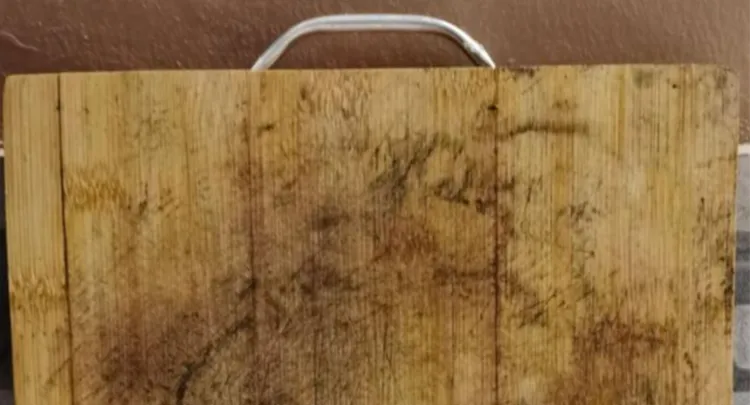
The cutting board is an essential tool in home kitchens, frequently used but often harboring mold due to improper cleaning and storage, posing a health risk. In daily life, not only the general population but even many medically trained individuals often hesitate to discard cutting boards that show mold, thinking that 'flipping it over makes it usable' or 'boiling it cleans it.' However, the damage that mold can cause can be much more subtle and severe than visible stains.
Image source: taken by the author.
I. Reasons Why Cutting Boards Get Moldy.
1. Humid Environment: If not fully dried after cleaning or if left in a damp and unventilated place for a long time, residual moisture cannot evaporate, creating a 'cultivation' conducive to mold growth.
2. Food Residues: Leftover vegetable, meat, and other waste that hasn't been cleaned promptly provides nutrients for fungal growth.
3. Material Characteristics: Wooden and bamboo cutting boards are more prone to retaining moisture and residues compared to plastic and stainless steel boards, as they have more cracks, are difficult to clean, and tend to develop mold more easily.
4. Improper Usage Habits: Sharing cutting boards for raw and cooked foods can facilitate cross-contamination by pathogenic bacteria and parasites' eggs.
5. Prolonged Use: The surface of the cutting board wears down, grooves deepen, making cleaning difficult. Under humid conditions with nutrients, it is more prone to mold formation.
The Potential Dangers of a Moldy Cutting Board.
Molds during their growth can produce aflatoxins (a type of carcinogen) that resist high temperatures and are not easily destroyed by normal cooking. Even if the visibly affected part by fungi is removed, the toxins that have already penetrated the inside of the cutting board cannot be eliminated, which can contaminate food during cutting. Short-term excessive intake can lead to symptoms such as nausea, vomiting, and abdominal pain, and in severe cases, can lead to liver failure; in the long term, it can cause persistent liver damage, which can progress to cirrhosis and even liver cancer.
Additionally, the dispersion of mold spores in the air can cause allergic reactions such as sneezing, coughing, and skin itching. Prolonged exposure to a moldy environment can also irritate the mucous membranes of the respiratory tract, potentially triggering chronic respiratory diseases, especially affecting the elderly, children, and people with weakened immune systems.
III. Moldy Cutting Board: Should It Be Discarded or Can It Be Saved?
If there is a slight mold, it can be treated: If there are only a few mold spots on the surface, without strange odors and with shallow cracks, it can be attempted to clean.
1. Use a hard-bristle brush to remove mold spots and food residues from the surface.
2. Mix white vinegar and baking soda in a 1:1 ratio and soak for 10 to 15 minutes, then clean to disinfect.
3. Wash with boiling water (if the material is not heat resistant, hot water can be used) and let it dry completely in a ventilated place.
If there is severe mold, they should be discarded: If wooden or bamboo boards have large areas of mold, deep stains, blackened cracks, or emit strange odors, it is recommended to replace them directly. Generally, it is suggested to change wooden or bamboo boards every 1 to 2 years, and plastic boards every 2 to 3 years.
IV. How to Prevent Mold on Cutting Boards from the Source.
1. Deep Cleaning: After use, clean immediately with a hard-bristle brush and detergent, paying special attention to grooves, and dry them after washing.
2. Keep Dry: After washing, place it in a ventilated and dry area. It is recommended to use a cutting board stand to avoid the bottom touching the surface of the table.
3. Separation of Raw and Cooked Foods: At least two cutting boards should be available, one for raw foods and another for cooked foods, to prevent cross-contamination.
4. Regular Disinfection and Replacement: Disinfect at least once a week (white vinegar, baking soda or boiling water can be used) and replace it in a timely manner according to the established timeline.
5. Choose the Right Material: In humid kitchens or homes where they are used frequently, prioritize food-grade plastic or stainless steel cutting boards, which are less likely to develop mold. If choosing wooden or bamboo cutting boards, select high-quality products that are not varnished or waxed, and be sure to clean and dry them immediately after use.
Overall, "Humidity + Residues" is the main cause of mold on cutting boards, while "Cleaning + Drying + Regular Replacement" is the key to prevention. Correctly recognizing the hazards of mold, avoiding handling misconceptions, and developing a habit of scientifically using cutting boards can effectively prevent the saying 'disease enters through the mouth.'
#salud familiar
#educación para la salud.


© 2025 Tribu Salud.