
¿Salto de ojo izquierdo atrae riqueza? Descubre la ciencia detrás del fenómeno
feb 07, 2026
Contribuyentes: Wang Chunhui, médico especialista, se graduó con una maestría en oftalmología en el Hospital Huaxi. Revisor: Chen Xi. Comisario: Yang Wei. Organización: Sociedad China de Oftalmología.
Título: Does Left Eye Twitch Bring Wealth? Discover the Science Behind the Phenomenon
"The twitching of the left eyelid signifies fortune, while the right indicates disaster." Many must have heard this phrase. Many people, when they wake up in the morning or suddenly notice their eyelid twitching uncontrollably, unconsciously wonder if it is "the left eyelid that brings fortune" or "the right that brings misfortune." It seems the eyelid has become a predictor of fate. However, science tells us that this is nothing more than a small health signal sent by our body, and it has nothing to do with luck or bad fortune.
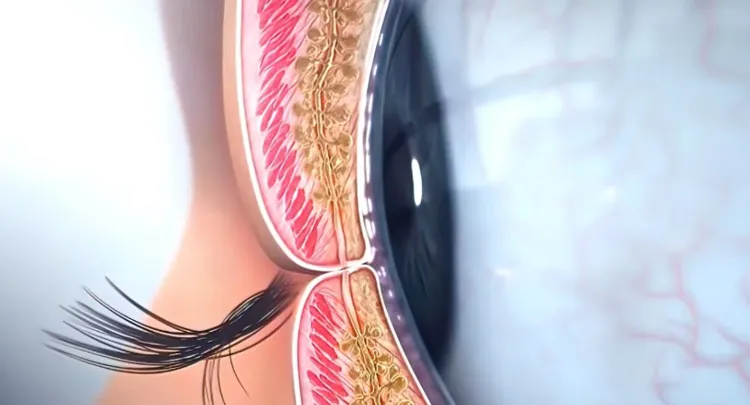
The eyelid, known in medicine as the "palpebra," exhibits a phenomenon known as "eyelid spasm." This is usually caused by involuntary contractions of the orbicularis oculi muscle under the influence of the nervous system. Imagine it like when your leg muscles sometimes suddenly contract; just like that, the eyelid muscles can also behave "naughtily" at times.
So, why do eyelids sometimes "dance" suddenly? The most common cause is actually quite ordinary: fatigue and stress. In modern society, the pace is fast; spending long hours in front of the computer screen, working overtime, lack of sleep, and anxiety can lead to excessive tension in the eye muscles. Just as cramps occur in the legs after running for a long time, overused eye muscles also "protest." Besides fatigue, excessive consumption of caffeine and alcohol can also cause eyelid movement. Caffeine in coffee, strong tea, and energy drinks stimulates the nervous system, making muscles more prone to involuntary contractions. Some sensitive individuals may even notice eyelid movements a few hours after having a cup of coffee.
Moreover, inflammatory or reactive eye diseases such as keratoconjunctivitis, blepharitis, dry eye syndrome, and ingrown eyelashes are also common causes. In addition, eye strain and vision problems can lead to eyelid spasms. If you need to squint to see clearly, the eye muscles will remain tense, which over time can lead to spasms. Many people notice that eyelid spasms disappear naturally after getting new glasses or adjusting their prescription. In some cases, persistent eyelid spasms may be a sign of certain nervous system diseases, such as Meige syndrome, cerebral hemorrhage, or cerebral infarction. If a child frequently experiences spasms, besides ruling out eye diseases in an ophthalmological check-up, it is also necessary to differentiate them from tics in children. However, if it is a case of occasional and short-duration spasms, there is no cause for alarm. Generally, spasms caused by lack of rest, excessive use of vision, or anxiety tend to resolve on their own. Maintaining a good mood, resting, applying heat to the eyes, and adequately supplementing nutrition can help alleviate these symptoms. Of course, if spasms persist for more than three days without improvement, it is advisable to consult an ophthalmologist as soon as possible.
The next time you feel your eyelid twitching, don't rush to find out whether it is the left or the right, nor to guess its meaning, but consider it a warm reminder from your body: it is time to rest, your eyes need to relax, and your body requires attention. Science has revealed the truth about eyelid twitching: it is not a harbinger of fate, but a health reminder. Many proverbs in Chinese culture reflect the wisdom of our ancestors in observing nature, but time moves on, and today we have a more scientific understanding. By letting go of the obsession with "eyelid twitch omens," we can better focus on our work, lives, and health in the present, and that is what truly represents good fortune.
References:
Chen Xi, Yang Wei, Li Danyu, et al. Advances in Research on the Pathogenic Mechanism and Treatment of Idiopathic Eye Spasm. International Journal of Ophthalmology, 2025, 25(7): 1105-1110.
Wang Xixi, Wan Xinhua. Research Progress on Eyelid Spasm. Chinese Journal of Neuroimmunology and Neurology, September 2022, Volume 29, Issue 5.
Expert Consensus on the Diagnosis and Treatment of Meige Syndrome in China (2025). Chinese Journal of Fundus Diseases, 2025, 41(06): 418-427.
Expert Introduction.
Wang Chunhui, ophthalmologist with a master's degree, has been working in the clinical field for 10 years. He completed a standardized 3-year training in the ophthalmology department at Friendship Hospital, affiliated with Capital Medical University. He has experience in diagnosing and treating diseases such as myopia in adolescents and children, cataracts, corneal diseases, glaucoma, and retinal diseases, including macular diseases, retinal vascular diseases, diabetic retinopathy, and optic nerve diseases. He has extensive clinical experience in procedures such as cataract femtosecond laser surgery and intraocular lens implantation, as well as in using laser in the anterior segment for YAG laser iridotomy, posterior capsulotomy, and treatment of retinal diseases. He has published several academic papers and co-authored a book.
#salud ocular
#hábitos de vida


© 2025 Tribu Salud.