
huevos de ganso una opción nutritiva poco conocida y valorada
feb 08, 2026
Title: Goose Eggs: A Little-Known and Underappreciated Nutritious Option Profile: Goose eggs are nutritious but low in consumption due to their cost. Recipes are proposed to encourage their inclusion in the diet. Keywords: ['Nutrition', 'Food Culture'] Author: Li Chun, registered nutritionist Reviewer: Shi Wenqing, senior livestock expert at Beijing Animal Husbandry Station Commissioner: Zhang Na, associate researcher at the School of Public Health, Peking University Production Planning: Wang Mengru Editor: He Yumo Reviewers: Xu Lai, Zhang Linlin Source: China Popular Science WeChat Public Account.
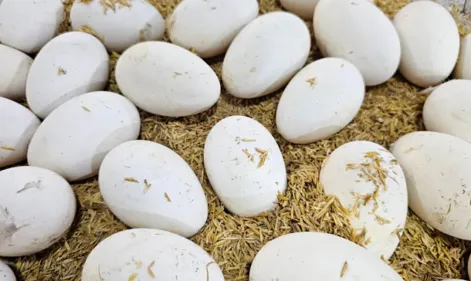
Goose eggs, as a nutrient-rich type of egg, rarely appear on our daily table and are even difficult to find in the market. Compared to chicken and duck eggs, the presence of goose eggs seems much lower.
According to the National Bureau of Statistics, in 2023, the egg production in our country reached 35.63 million tons, of which 28.39 million tons are chicken eggs. Duck eggs make up the bulk of the remainder, while goose eggs and other types are quite scarce.
Why are there so few people selling goose eggs and even fewer consuming them? This is influenced by both the intrinsic characteristics of goose eggs and the factors of market supply and demand. Today, we will unveil the reasons behind the indifference towards goose eggs and explore the story behind this seemingly ordinary type of egg.
The reasons for the low sale of goose eggs are mainly as follows: 1. Low demand: Compared to chicken eggs, the consumer base for goose eggs is smaller, and many people are less familiar with the taste and uses of goose eggs than they are with chicken eggs. 2. Higher price: The production cost of goose eggs is relatively high, leading to an increased selling price, making some consumers more inclined to purchase cheaper chicken eggs. 3. Limited supply: The number of geese raised is generally lower than that of chickens, and the amount of goose eggs naturally produced is limited, which restricts market supply. 4. Cooking methods: People are generally accustomed to using chicken eggs for various cooking, while there is insufficient understanding of cooking methods and scenarios for goose eggs, leading to infrequent use. 5. Shorter shelf life: The shelf life of goose eggs is usually shorter than that of chicken eggs, which may make some consumers cautious about purchasing them.
The mother goose did not come into the world as an 'expert egg layer'.
Regarding poultry laying frequency, there is a saying: 'one egg a day for chickens, two days for ducks, three days for geese.'
Anyone who has raised chickens and ducks knows that hens lay eggs almost all year round, whereas geese only lay eggs every 2 to 3 days, with significant seasonality (generally starting in September and stopping in May or June of the following year), producing only a few dozen eggs in a year.
Besides the low egg production, what really worries breeders is the high cost of raising geese, which is attributed to their long growth cycle, the need for large breeding spaces, and high food consumption. Female geese are scarce, produce a small amount of eggs, and lay eggs on specific days, making goose egg production difficult to scale.
Storage and transportation of goose eggs present both challenges.
The shell of a goose egg is thicker than that of chicken and duck eggs, but while it appears sturdy, it is actually fragile. Currently, there are very few conservation packaging and cold chain equipment specifically designed for goose eggs; many merchants can only resort to using logistical solutions for chicken eggs. Goose eggs are three times larger than chicken eggs, and when filling a box, the eggs at the bottom must bear the pressure of dozens of kilograms from those above; the packaging for chicken eggs is insufficient to support that weight, and with a slight movement, they easily break.
Not only is the breakage rate high, but the storage time of goose eggs is also short. This is because the pores in the egg shell are larger, leading to a quicker loss of moisture during storage, so they are not as durable as chicken eggs.
The reasons why few people eat goose eggs are several. Firstly, the production of goose eggs is relatively low, with geese only laying a few eggs each year, as opposed to the more frequent egg-laying of chickens. Secondly, the taste and texture of goose eggs differ from chicken eggs, which may not suit some people's palates. Additionally, goose eggs are generally more expensive, and the limited purchasing channels also make them less prevalent in the market compared to chicken eggs. Therefore, relatively speaking, goose egg consumption is quite low.
Aside from the scarcity of goose eggs on the market, the public's lack of interest in consuming them can be attributed to three main reasons.
1. The size is too large.
A single goose egg weighs the equivalent of three chicken eggs, and when cooked, the yolk is the size of a ping-pong ball.
For those living alone: 'Eating half is troublesome, while eating a whole one is too much'; after all, the Chinese Dietary Guidelines recommend consuming 40-50 grams of eggs per day (equivalent to one chicken egg), which is roughly 1/3 of a goose egg.
2. The flavor is strong and unpleasant.
Geese generally live near water and feed on aquatic grasses and riparian plants; these components may produce certain fishy substances during metabolism. Additionally, goose eggs have a high fat content, which intensifies their aroma. For this reason, those who accept them find them delicious, while those who do not find them unpleasant.
Moreover, the protein in goose egg whites is dense, and the yolk has a noticeable grainy texture; if not cooked carefully, it can become tough and hard to digest.
3. The price discourages most.
While the price of chicken eggs is still below 1 yuan, goose eggs are already sold between 8 to 15 yuan each. What hurts more is that many people wonder: 'Why spend ten times more on something so similar?'
#nutrición
#la cultura alimentaria


© 2025 Tribu Salud.