
Hinchazón en brazos y manos: ¿puede ser oclusión venosa?
feb 12, 2026
Title: Swelling in Arms and Hands: Could it be Venous Occlusion?
Profile: The occlusion of the brachial vein affects circulation in the upper body, causing swelling that can be misdiagnosed.
Keywords: ['The term "心血管" translates to Spanish as "cardiovascular."', 'Health education']
Example of life:
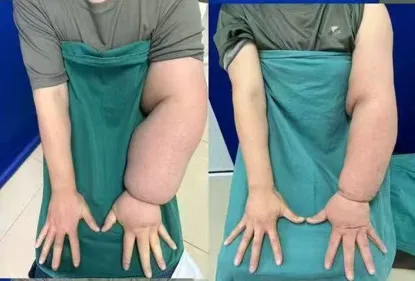
Recently, a 40-year-old patient who has been suffering from swelling in the left arm for many years consulted the vascular surgery department of the city's Number One Hospital. Mr. Lu, who had suffered from a malignant lung tumor over ten years ago, had been surgically treated at a local hospital and had been on long-term targeted medication. Five years ago, due to occlusion in the brachial vein, he underwent endovascular treatment in a local hospital, but failed to restore circulation. Over time, the swelling in his left arm became increasingly severe. On this occasion, at the vascular surgery department of the city's Number One Hospital, the occluded vein was successfully opened. After the surgery, the patient continued regular treatment with anticoagulant and edema-reducing medications, supplemented with compression therapy, and currently, the swelling in his left arm has visibly improved compared to before the surgery.
Clinical manifestations lack specificity, making it easy for the diagnosis to be overlooked.
The brachiocephalic vein, also known as the innominate vein, is a major blood vessel in the upper chest of humans, with one on each side. It is formed by the confluence of the internal jugular vein and the subclavian vein and ultimately drains into the superior vena cava, responsible for transporting blood from the head, neck, and upper limbs back to the heart. Simply put, the brachiocephalic vein acts as a main highway for blood transport in the body; in case of obstruction, it can directly affect blood circulation in the upper body. The causes of brachiocephalic vein obstruction are primarily divided into two categories: external compression and internal thrombus formation. External compression is the most common cause, typically attributed to tumors, benign lesions, and fibrous diseases. On the other hand, factors such as central venous catheters, states of hypercoagulability, and radiotherapy are prone to cause thrombosis within the brachiocephalic vein itself. Patients often consult for swelling in the arm, and since there are multiple causes of edema, obstruction of the brachiocephalic vein is generally not considered first, leading to a high rate of misdiagnosis.
Symptoms have slowly worsened, affecting quality of life.
The most common clinical manifestation of brachiocephalic vein occlusion is swelling of the affected arm, accompanied by a feeling of heaviness and pain. As the narrowing of the brachiocephalic vein worsens, it may lead to occlusion affecting blood supply to the superior vena cava; in addition to the typical symptoms of swelling in the extremities, the patient may experience distension of the superficial veins of the chest wall, difficulty breathing, hoarseness, and even cyanosis, which severely affects the patient’s daily life.
Minimally invasive intervention surgery is the primary treatment method.
For patients with this type of narrow or closed obstruction, the primary treatment method is currently minimally invasive intervention. The goal of treatment is to relieve the obstruction, mitigate symptoms, and prevent recurrences. During the procedure, local anesthesia is used, and under ultrasound guidance, successful puncture of the left axillary vein is achieved. After passing the catheter and guidewire through the occluded section of the brachiocephalic vein, balloon dilation of the brachiocephalic vein is performed, and a bare stent is implanted. Postoperative angiography shows visualization of blood flow in the brachiocephalic vein, with a patent lumen. For some cases where intervention has failed, surgery for embolus removal or thoracic decompression may be considered to relieve further vascular compression.
It is important to pay attention to the causes of the disease and to manage postoperative medications.
Treating the underlying cause is fundamental in managing venous obstruction in the arm. Clinicians must actively seek and address the root cause, such as external tumor compression (lung tumors, lymphomas), which may require tumor removal or a combination of chemotherapy and radiotherapy. In cases of catheter-associated thrombosis or in patients with a tendency for thrombosis, anticoagulant treatment is needed and the appropriate time for catheter removal should be evaluated. If minimally invasive surgery is performed with the implantation of a metal stent, long-term anticoagulation is generally required to prevent thrombus formation inside the stent.
Summary.
Occlusion of the subclavian vein, especially when it occurs acutely, often causes sudden swelling of the extremity. The cause of this swelling may easily be confused with heart or kidney failure, lymphatic circulation disorders, or infections. When unexplained swelling occurs in an extremity, the patient should seek medical attention immediately. The treatment plan should be developed collaboratively by multiple disciplines, such as vascular surgery and radiology.
Author:
Zhang Xiaoyu, vascular surgery specialist at the First People's Hospital of Shanghai.
Reviewer:
Ding Qingwei, attending physician in the vascular surgery department of the First People's Hospital of Shanghai.
#educación para la salud
#el término "心血管" se traduce al español como "cardiovascular".

© 2025 Tribu Salud.