
Cómo disfrutar alimentos en conserva durante el año nuevo sin afectar la salud de pacientes con tumores
feb 13, 2026
Title: How to Enjoy Pickled Foods During the New Year Without Affecting the Health of Cancer Patients Profile: Cancer patients should be cautious with pickled foods during the Spring Festival. Tips are provided for their consumption.
With the arrival of the Spring Festival, pickled foods are a common addition to the table during New Year celebrations in China, carrying a unique cultural memory and flavor experience. However, what health risks are hidden behind these delicacies for cancer patients? How can we find a balance between traditions and health needs? Dr. Jian Xiaolan, Deputy Director of the Oncology Department at Hunan Integrative Medicine Hospital (Affiliated Hospital of the Hunan Academy of Traditional Chinese Medicine), provides guidance on this topic.
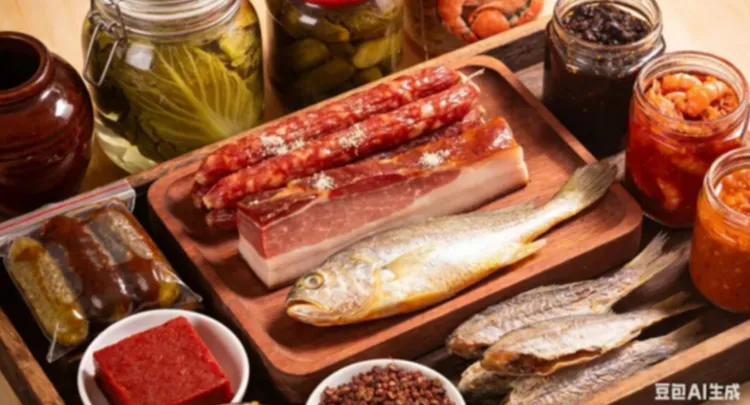
The variety of preserved foods across different regions of China is broad, each with its unique characteristics:
Cured meats: bacon, sausages, dried fish, among others, produced through salting, air drying, or smoking.
Vegetable products in brine: sauerkraut, kimchi, pickled cucumbers, preserved vegetables, among others.
Fermented soybean products: fermented tofu, fermented soybeans, etc.
Seafood pickles: salted fish, shrimp paste, crab paste, among others.
Various studies have demonstrated that preserved foods are associated with an increased risk of certain types of cancer.
1. Nitrates: Many preserved foods, particularly processed meats, contain nitrites or nitrates. These substances can convert into nitrosamines in the body, which have been classified as "possibly carcinogenic to humans" by the International Agency for Research on Cancer.
2. High salt content risk: Preserved foods often have an extremely high salt content. A long-term diet rich in salt not only increases the risk of hypertension and cardiovascular diseases but may also damage the gastric mucosa, increasing the likelihood of developing stomach cancer.
3. Other potential risks: some traditional preservation methods can generate carcinogenic substances such as benzo[a]pyrene (in smoked foods) or aflatoxins (in poorly fermented soy products).
It is worth noting that these studies are mostly based on long-term and large-scale consumption, and the risk levels of different pickled foods also vary.
To understand whether tumor patients can consume pickled foods, it's important first to recognize their digestive system characteristics:
1. Weakened digestive function: The tumor itself and treatments (such as chemotherapy and radiotherapy) often lead to decreased secretion of digestive enzymes, reduced gastrointestinal motility, and diminished ability to digest and absorb.
2. The mucosa is more susceptible to damage: treatment can make the gastrointestinal mucosa more fragile and sensitive to irritating foods.
3. Special nutritional needs: Cancer patients require adequate nutritional support for treatment and rehabilitation but must also avoid foods that could exacerbate their overall burden.
4. Significant individual differences: there is considerable variability in tolerance among different types of tumors, stages of treatment, and individuals, thus no universal dietary standard exists.
Cancer patients should not completely eliminate pickled foods but must be extremely careful in their selection and strict in control.
Situations where moderation may be attempted:
1. Treatment has concluded, is in the recovery phase, and gastrointestinal function is good;
2. No tumors in the digestive tract or related disease history;
3. Used as a flavor accompaniment rather than a main dish.
4. Choose relatively safe varieties of pickles (e.g., low-salt pickles, non-smoked processed meats).
Situations that should be strictly avoided:
1. Undergoing chemotherapy and radiotherapy, especially during periods of noticeable gastrointestinal reactions;
2. History of digestive tract tumors, such as gastric cancer, esophageal cancer, and colorectal cancer.
3. Coexisting conditions requiring salt restriction, such as hypertension and renal insufficiency.
4. Gastrointestinal function still not recovered post-operatively.
If cancer patients decide to try preserved foods in small amounts during the Spring Festival, they should follow these principles:
1. Strictly control the quantity and try only a little.
It is suggested that each intake does not exceed 30 grams (approximately two slices of bacon or one small spoonful of pickles), with a total intake not exceeding 2-3 times during the Spring Festival.
2. Select low-risk varieties.
Prefer homemade, low-salt, short-duration pickles; avoid brightly colored processed meats (which may have high nitrite content); do not choose heavily smoked meats.
3. Scientific pre-treatment to reduce damage.
Pickled meats can be boiled in water for 5-10 minutes, discarding the broth to reduce salt content and some harmful substances, and thoroughly washing off surface salt and impurities.
4. Combine with "detoxifying" foods.
They can be combined with fruits and vegetables rich in vitamin C (such as oranges, kiwis, and green peppers), as vitamin C can block the formation of nitrosamines; cruciferous vegetables (such as broccoli and cauliflower) that contain anti-cancer substances; and foods rich in sulfur compounds, such as garlic and onions.
5. Never serve as a main dish.
Preserved foods should be used as a flavor complement, combining them with fresh vegetables, soybean products, and high-quality protein sources, such as fish and chicken breast.
6. Pay attention to the timing of consumption.
Avoid eating on an empty stomach; it is best to try in small amounts after consuming some soft foods (such as porridge or rice).
7. Observe the body's reactions.
After consumption, closely monitor for reactions such as dry mouth, stomach discomfort, or bloating. If any discomfort occurs, stop consumption immediately.
8. Ensure adequate hydration.
It helps the kidneys eliminate excess salt and reduce the burden on the body.
Dr. Wang Huazhong, Deputy Medical Director and head of the Oncology Department, reminds us that dietary management for cancer patients is an important part of recovery but does not require complete deprivation of the joy of living. Under the guidance of physicians and nutritionists, intelligent choices can be made based on personal circumstances, thus enjoying the festive atmosphere while protecting health. The best "taste of the New Year" is not a particular traditional dish, but the warmth and care of family gatherings.
#dieta saludable.
#tumor

© 2025 Tribu Salud.