
Comida saludable en el Festival de Primavera: cómo disfrutarla bien
feb 14, 2026
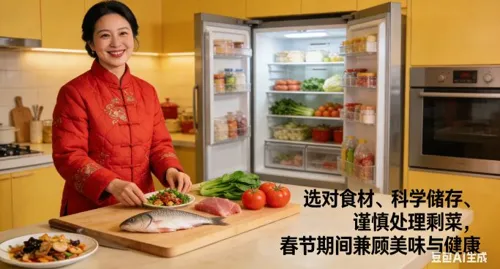
Title: Healthy Food During the Spring Festival: How to Enjoy It Well Profile: The Spring Festival invites banquets, but it is key to maintain a balanced and healthy diet with fresh ingredients.
The Spring Festival table is the most solemn expression of Chinese sentiments. However, after several days of feasting, nearly 40% of the population experiences an average weight gain of 2 kilos, and the influx to gastroenterology consultations also tends to increase. Faced with a table full of delicacies, is it necessary to pay the price of feeling "body fatigue" to enjoy a good meal? The answer is no. By scientifically analyzing the physical and biological laws behind foods, we discover that enjoying meals calmly does not have to conflict with weight management and food safety. From the bacterial interactions in the microscopic world to the nutrient proportions on the plate, understanding the fundamental logic of "selecting, storing, and cooking" is key to a healthy Spring Festival.
First, the "invisible ecosystem of the table".
Every dish during the Spring Festival is actually a complex microscopic ecosystem. When food leaves the stove, a war without smoke has already begun.
In the hidden kingdom of microorganisms, Bacillus cereus can double its amount every 20 minutes within a temperature range of 15 °C to 45 °C; while cooked rice left at room temperature for 4 hours can reach up to 600 times its initial bacterial colony count. At the same time, damaged plant cells release an enzyme called nitrate reductase, which in an anaerobic environment triples the conversion rate of nitrates to nitrites. Thus, consuming "fresh" foods is not only a matter of taste, but also a health issue.
II. The body's adaptability and the chemical clock of foods.
The human body follows a dose-effect curve in nutrient absorption and utilization. A high-protein diet, such as steamed fish and skinless poultry, can increase the thermic effect of food and enhance the feeling of satiety. On the other hand, excessive saturated fats are directly related to the accumulation of visceral fat.
More hidden is the "chemical clock" of foods. Animal proteins continue to undergo a slow deamination reaction at a temperature of 4 ºC in the refrigerator, generating sulfurous compounds with intense odors. The oxidation of fats initiates a chain reaction of free radicals, increasing the amount of propanal in fried foods by 47% compared to fresh samples. This is not a sudden mutation of the ingredients' "decomposition," but an inevitable consequence of the breaking and reconfiguring of chemical bonds.
Three or four tips for creating a healthy table for the Chinese New Year.
First strategy: choose the right ingredients, replace "refined" with "whole grain".
Vegetables should occupy half of the plate, preferably dark green leafy vegetables, cruciferous vegetables, and mushrooms. Regarding staple foods, the "Dietary Guidelines for Residents of China (2022)" suggest that adults consume between 200 and 300 grams of cereals daily, of which 50 to 150 grams should be whole grains and legumes. A portion of fresh fruit, such as an orange the size of a fist, provides approximately 60 kcal, while the same volume of fruit juice doubles the calories and loses much of its dietary fiber. Nuts should preferably be natural, and a small daily portion of about 20 grams is sufficient.
Second advice: change the order and reconstruct satiety with "soup - vegetables - meat - staple food."
Before the meal, it is recommended to consume a light vegetable soup, followed by an adequate intake of vegetables, then consume fish, seafood, and soy products, and finally complement with carbohydrates. This order can significantly reduce spikes in blood glucose and insulin response after meals.
Third advice: scientific storage, intervening within the "golden hour."
Leftovers should be refrigerated within 2 hours of cooking. Experiments have confirmed that a dish of fried peppers with meat left at 25°C for 24 hours saw bacterial colonies rise from 13,000 to 200 million; in contrast, if sealed hot and refrigerated, after 24 hours it only rises to 2,700. It is important to remember: wait for food to cool slightly until it is no longer hot to the touch before refrigerating, rather than letting it cool completely, as the high-temperature zone is the "highway" for bacterial proliferation.
Fourth strategy: classification of leftovers, implementing a "traffic light" treatment mechanism.
Red (do not keep overnight): all green leafy vegetables, seafood, soft-boiled eggs, and wood ear mushrooms. Relevant studies have shown that the nitrates in reheated green leafy vegetables can reach 5 to 8 times more than in fresh ones. The nitrate content in wood ear mushroom broth left overnight can increase from 0.5 mg/kg to 4.2 mg/kg.
Yellow light (1-2 days): meats and root vegetables. They should be stored sealed in refrigeration and reheated to a central temperature of over 75°C for at least 15 seconds before consumption.
Green (Frozen): It is recommended to package portions of rice, steamed bread, and other staple foods, as well as fresh meat, and label with the date.
Fourth, the conflict between traditional views of saving and modern food safety.
Error one: "Food must cool completely before being placed in the refrigerator."
This is the most common cognitive blind spot. When food cools slowly in the 20°C-40°C range, it provides the best breeding ground for bacteria. The correct method is: distribute leftovers into shallow containers, seal them, and refrigerate them directly.
Error two: "The refrigerator is a safety box; anything placed there can be eaten."
Listeria monocytogenes — this "invisible killer in the refrigerator" — can continue to proliferate slowly at a temperature of 4ºC. Experimental data indicate that in cooked meat products stored at 4ºC for 7 days, although they do not show any appearance of decomposition, the total colony count and biogenic content have significantly increased. Refrigeration can only delay but not stop biochemical reactions.
Error three: "Heating thoroughly eliminates all risks."
The enterotoxin produced by Staphylococcus aureus has exceptional thermal resistance, remaining active even at temperatures of 120 °C. Even when brought to a boil again, the toxin may still be present and cause severe vomiting. This is a problem derived from the metabolites of microorganisms, not from the bacteria itself.
V. Summary
Behind the food of the Spring Festival lies a dialogue between traditions and modern nutrition science. Choosing the right ingredients must reduce the body's burden from the source; rapidly cooling foods is key to competing against microorganisms; and decisively discarding leafy vegetables that have passed the night is a sign of health wisdom. Truly, saving does not mean consuming all food scraps but achieving that each ingredient is enjoyed at its best flavor moment through precise purchases and proper combinations. This New Year, we hope to embrace the warmth of celebrations while simultaneously protecting the health of our loved ones with a scientific approach.
Kind reminder: This article is a non-profit scientific outreach, aiming to convey healthy eating concepts without involving any specific brands or product recommendations. There are individual differences, so if you have any specific diseases or severe discomfort, we recommend consulting a specialized doctor.
#dieta saludable.
#nutrición festiva


© 2025 Tribu Salud.