
¿Sientes que tropiezas más al caminar? Podría ser glaucoma
feb 27, 2026
Author: Liu Zhengrong, Eye Department, Hunan Province Hospital of Integrated Traditional Chinese and Western Medicine (Affiliated Hospital of Hunan Academy of Traditional Chinese Medicine). Reviewer: Wei Guannan, Deputy Director of the Ophthalmology Department at the Hunan Province Hospital. Organization: Hunan Medical Chat.
Title: Do you feel like you stumble more while walking? It could be glaucoma.
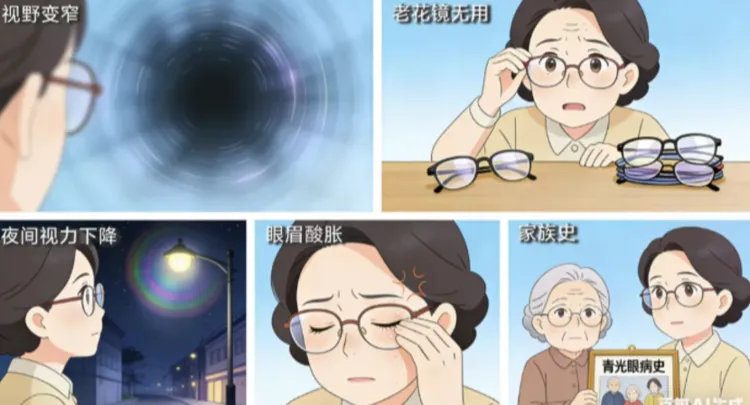
Aunt Li (a fictitious name), 60 years old, has recently noticed that she often stumbles while walking and struggles to grab things. Initially, she thought it was due to her age and slow reflexes, but during a medical checkup, she realized her field of vision had narrowed to the point where it felt like she was "looking at the world through a tube."
Dr. Wei Guannan, Deputy Director of the Ophthalmology Department at the Hunan Province Hospital of Integrated Traditional Chinese and Western Medicine, explained that this is a typical symptom of glaucoma. Cases like Aunt Li's are not uncommon. Glaucoma is the second leading cause of blindness worldwide, but it is often overlooked because its initial symptoms are not obvious.
The interpretation of glaucoma from both traditional Chinese medicine and Western medicine involves a thorough analysis of the disease and its treatments. From the Western medicine perspective, glaucoma is a condition affecting the optic nerve and is commonly associated with elevated intraocular pressure. It is considered one of the leading causes of blindness globally. Typical treatments include medications to lower eye pressure, laser therapy, and, in some cases, surgery.
On the other hand, traditional Chinese medicine (TCM) approaches glaucoma holistically, emphasizing the balance of the body and vital energy (Qi). In TCM, glaucoma is believed to result from deficiency of Qi in the kidneys or liver, leading to energy stagnation and, consequently, vision problems. TCM treatments might include acupuncture, medicinal herbs, and dietary changes to restore Qi balance.
Both perspectives provide a complementary approach to diagnosing and treating glaucoma, highlighting the importance of comprehensive care that integrates the best of both worlds.
The Western medical approach considers glaucoma a group of diseases that share characteristics such as optic nerve atrophy and visual field loss, primarily related to a pathological increase in eye pressure. Inside the eyeball, there is a fluid called aqueous humor, which normally maintains a dynamic balance. When the circulation system of aqueous humor fails, eye pressure can increase, compressing the optic nerve over prolonged periods, causing gradual death of nerve fibers and resulting in irreversible visual field loss.
The "silent invasion" of glaucoma.
The vast majority of glaucoma cases (especially open-angle glaucoma) present no symptoms early on, and by the time patients notice peripheral vision loss, the condition is often at a moderate to severe stage. This is the most dangerous aspect of glaucoma—it quietly steals vision like a "silent thief."
Warning signs to watch for include:
1. Gradual narrowing of vision, as if viewing through a "tunnel."
2. Frequent changes in reading glasses, but with little improvement.
3. Reduced night vision, with rainbow circles appearing around lights.
4. A frequent sensation of swelling and pain in the eyes, with a feeling of tension in the brow area.
5. Family history of glaucoma.
New approaches in the prevention and treatment of glaucoma through the combination of traditional Chinese and Western medicine.
Diagnosis and treatment in Western medicine:
1. Early detection: Individuals over 40 are advised to undergo annual eye pressure measurements, fundus examinations, and visual field tests.
2. Pharmacological treatment: Primarily involves eye drops to reduce intraocular pressure, such as prostaglandin derivatives and beta-blockers.
3. Laser treatment: Selective laser trabeculoplasty can improve aqueous humor drainage.
4. Surgical treatment: When medications and laser treatments cannot control the disease, surgery, such as trabeculectomy, may be considered.
Traditional Chinese medicine:
1. Regulation with Chinese medicine: Through symptom-based diagnosis and treatment, regulation with Chinese medicine can effectively control eye pressure under the guidance of a TCM specialist.
2. Acupuncture therapy: Points such as Jingming, Cuanzhu, Taiyang, and Fengchi are used to promote circulation of Qi and blood in the ocular area.
3. Traditional Chinese medicine: Regulate emotions, avoid liver Qi stagnation, maintain a light diet, and limit spicy or stimulating foods.
Advantages of combining traditional Chinese medicine and Western medicine: Western medicine quickly controls intraocular pressure, preventing further optic nerve damage; Chinese medicine regulates the overall state of the body, maintaining the balance of Yin and Yang. The combination of both can enhance treatment effectiveness.
Daily maintenance: prevention is better than cure.
1. Regular check-ups: Individuals over 40 and those who use electronic screens for extended periods should have a comprehensive eye exam at least once a year.
2. Emotional management: Avoid emotional excitement, maintain a positive mood, and ensure balanced liver Qi circulation.
3. Dietary regulation: Properly supplement foods rich in vitamins C and E, such as citrus fruits and nuts; TCM recommends chrysanthemum tea and goji berries, as well as tea made from lotus seeds.
4. Lifestyle habits: Avoid keeping the head down for prolonged periods, do not drink large amounts of water at once (recommended to do so in small amounts at multiple times); ensure adequate sleep; correct poor vision habits.
5. Exercise tips: Moderate aerobic exercises, such as walking or practicing tai chi, may promote blood circulation, but activities that could increase eye pressure, such as inversions or heavy lifting, should be avoided.
Experts warn.
Dr. Wei Guannan, ophthalmology expert, warns that the key to preventing and treating glaucoma is to avoid common misunderstandings, as well as to detect and intervene early.
Mistake one: "If eye pressure is normal, you will not have glaucoma." Incorrect! About 1/3 of glaucoma patients have normal eye pressure.
Mistake two: "Glaucoma is only high eye pressure." This is not comprehensive; glaucoma is fundamentally a disease of the optic nerve.
Mistake three: "Glaucoma can be cured." Currently, it is not possible to reverse optic nerve damage, but its progression can be controlled.
Mistake four: "Eye drops alone are sufficient." Regular check-ups and adjustment of the treatment plan are required.
Follow @HunanMedicalChat for more health and science information.
(Editor 92)
#salud
#oftalmología

© 2025 Tribu Salud.