
terapia de pintura como receta del alma para mejorar la salud mental
feb 28, 2026
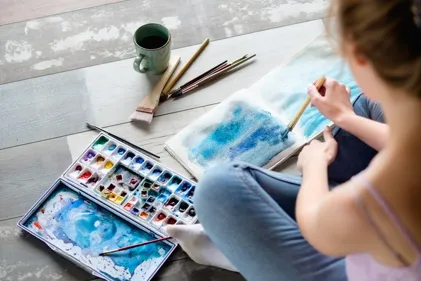
Title: Art Therapy as a Soul Recipe for Improving Mental Health Profile: Art therapy, an emerging form of treatment, helps to release tension and improve emotional health through self-expression. Keywords: ['Mental Health', 'Art Therapy'] Author: Zhang Xiaoyan, supervising nurse at the Hospital of Oncology, Chinese Academy of Medical Sciences. 班蒙宇, nurse at the Hospital of Oncology, Chinese Academy of Medical Sciences. Reviewer: Zheng Wei, deputy director of nursing at the Hospital of Oncology, Chinese Academy of Medical Sciences. Note: The cover image is from a copyrighted image library, and its use for forwarding may lead to copyright disputes. The life always presents moments like these: whether you feel overwhelmed by work, filled with anxiety not knowing whom to turn to, or your body suffers the ravages of illness, with pain and loneliness interweaving. In those moments, although medications and reason can help solve some problems, we need a gentler dose of "spiritual prescription". Art therapy is one of those forms of healing that does not rely on language but can reach directly to the heart. Whether you are an ordinary person caught by daily stress or a patient fighting a disease, through strokes, colors, and images, you can find relief and rebuilding both mentally and physically in the act of creation.
Art Therapy: The healing power of art in the journey of life. Brush: the "storage box" that holds emotions. You may have experienced this feeling: as if your heart is full of a bunch of crumpled, disordered, and overwhelming paper, wanting to share it with family and friends but not knowing how to start, and in the end, you can only sigh and say "it’s nothing". These emotions that you cannot express, if kept inside, will only accumulate more and more. Painting becomes an exclusive "emotion box," capable of quietly absorbing those feelings you cannot express and releasing them again. You don't need to worry about what you are going to paint: when you feel anger, just use a thick brush to apply large dark color spots and draw zigzagging lines; if you feel sick and unwell, paint some lonely circles or cover a corner of the paper with gray tones; if you are afraid, you can represent that fear as a small "monster," as if you are locking that overwhelming emotion in a paper cage. This type of projective expression, which requires no words, allows you to confront your fears, find a channel to release your emotions, and naturally accept what you feel in this moment. The psychological burden that once seemed so heavy will lighten as you move the brush, allowing you to accept and release your emotions more quickly and alleviate mental pressure.
Color: The "visual antidote" that relieves discomfort. When pain and discomfort knock at your door like an unwelcome visitor, and anxiety sounds like a relentless alarm clock, do not rush to take a pill. Open the drawer, take some colored pencils, choose a sheet of paper, and prescribe yourself a dose of "colorful comfort". Soft blue and green tones, warm orange and yellow, and even bold red can visually divert attention from pain, making "the pain divide in half". After a few weeks of this practice, you will notice that pain is no longer the only protagonist, and gentle glimmers of light will appear in the emotional palette, allowing the tension inside you to quietly dissipate.
Creation: The "regulator" of biological rhythms. Many people may experience the following: when they feel pain, the more they try to tell themselves "don’t feel pain", the tenser their body feels; when they are anxious, the more they try to convince themselves "don’t worry", the faster their heart rate becomes. Painting can help us break this cycle of "the more tense, the more uncomfortable". It acts as a "regulator" of physiological rhythms, that can slowly calm the agitation of the body to the rhythm of the brush strokes. When you focus on painting, your breathing inevitably slows down with the brush tip’s rhythm, and your heart rate also decreases. Particularly when sketching patterns with soft lines and choosing warm colors to fill in, the body begins to enter a state of relaxation similar to meditation. Studies have found that people who consistently practice painting show a significant reduction in blood pressure and cortisol levels (a "stress hormone"), and the shoulders, which were tense from pain or anxiety, as well as the stiff back, also begin to relax, allowing for deep relaxation both physically and mentally, which can indirectly help in the recovery from illnesses.
Strategy Division: Customized exclusive "self-healing" plan. When you feel pain or discomfort: try painting freely, using soft shades of blue and green, focusing on the flow of your brushstroke to divert attention. When anxiety or insomnia arises: choose to paint with a specific theme, such as "tranquility" or "safety", and combine this with deep breaths to help synchronize and slow down your heart rate and breathing. If you feel trapped in emotions like sadness or depression: consider joining a painting group or club, sharing the creative process with others for social support and emotional resonance.
Therapy through painting, while it cannot directly eliminate life stresses or cure diseases, can offer you gentle companionship on those difficult and painful days. You do not need expensive painting materials; a colored pencil, a sheet of paper or even the back of an eraser can become your "healing field". On those days when you feel tormented by pain and surrounded by anxiety, it can help you find an emotional outlet, providing you with comfort and allowing your body and mind to find a moment of peace and strength at the intersection of colors and lines. So, at this moment, why not try opening a drawer, taking a colored pencil, and, without thinking about "what to draw" or "if it will be good", simply let yourself go and trace, creating your own "recipe for the soul"?
#salud mental
#arteterapia

© 2025 Tribu Salud.