
¿Las gafas anti-fatiga son una solución real o un mito?
mar 31, 2026
Title: Are Anti-Fatigue Glasses a Real Solution or a Myth? Profile: The arrival of anti-fatigue eyeglasses offers hope to many, explaining their use and adaptation to relieve visual fatigue. Keywords: ['Anti-fatigue glasses for the eyes.', 'Adjustment.', 'Visual fatigue.', 'Visual function examination.']
In the digital age, working adults face electronic screens for more than 8 hours daily, leading to increasingly common symptoms of visual fatigue such as dryness, eye strain, blurred focus, and even headaches. Consequently, anti-fatigue glasses have become an 'essential item' for many.
But are these 'rescue tools' really suitable for everyone? What key points should be considered during the fitting? Changsha Aier Eye Hospital provides detailed information about the practical knowledge of adult anti-fatigue glasses.
First, the principle of operation of anti-fatigue glasses: 'relieving the burden' on the eyes.
Our eyes can focus on different distances thanks to the contraction and relaxation of the ciliary muscle. Prolonged near-vision tasks can result in continuous strain on the ciliary muscle, which can lead to spasms and fatigue, making it one of the primary causes of visual fatigue.
Anti-fatigue lenses are a simplified version of progressive multifocal technology and are not designed with a single prescription. The top part of the lens maintains the precise prescription for distance vision, while the lower area incorporates an addition of +0.50D to +1.25D of positive diopters (also known as the addition effect). In other words, when looking at nearby objects, the lenses help decrease some of the accommodative effort, alleviating the strain on the ciliary muscle and restoring the micro-adjustments of the eye, which helps delay or relieve the sensation of fatigue.
For example, when looking at a book 33 centimeters away, the initial adjustment effort required is approximately 300 diopters. However, when using anti-fatigue glasses with a correction of +100 diopters, the eyes only need to exert an effort of 200 diopters for clear vision, significantly reducing the strain on the eyes.
Second, not everyone is suitable: the 'admission standards' for anti-fatigue glasses.
It is important to note that anti-fatigue glasses are not a universal solution and are not suitable for everyone. Three groups should exercise caution or avoid their use.
Individuals with evident abnormal visual functions, such as insufficient convergence or severe accommodative spasm, may disrupt visual balance if they use lenses without undergoing a professional visual function examination.
2. Those with excessive refractive differences, meaning a difference of more than 200 diopters between both eyes, may experience discomfort due to the significant disparity in the image between the eyes while wearing lenses.
Individuals with high myopia, high astigmatism, or presbyopia with an increase greater than +2.50D cannot meet their close vision needs with common anti-fatigue lenses, making specific progressive multifocal lenses more appropriate.
Third, adaptation is key: it is not just about 'buying glasses,' but rather about 'a medical action'.
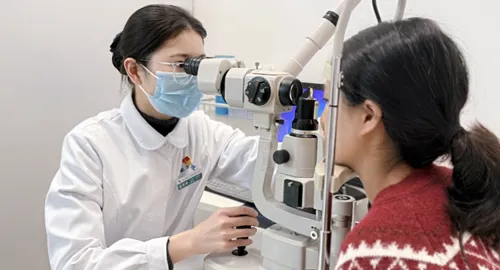
Choosing the right anti-fatigue glasses requires a professional fitting that should include at least three key steps.
First, a comprehensive eye examination is conducted to accurately obtain the prescription for distance vision and the pupillary distance, which is the foundation for lens adaptation. Second, visual function tests are carried out, assessing indicators such as accommodative amplitude, sensitivity to accommodation, and positive and negative relative accommodation, to determine whether lens use is appropriate and to establish the necessary additional power. A prescription that is too high or too low can not only fail to alleviate fatigue but may also cause new discomfort. Finally, a simulated lens test is performed in work scenarios like computer use or reading, ensuring there are no sensations of movement or distortion, to guarantee comfort in actual use.
Additionally, anti-fatigue glasses are designed for medium and near distances, so there is no issue using them for walking or going up and down stairs in daily life. However, it is not recommended to use them as primary glasses for driving or during intense physical activities, as the auxiliary area at the bottom of the lenses can make the ground appear slightly elevated, potentially affecting visual perception.
Overall, anti-fatigue glasses are an effective functional tool for alleviating adult visual fatigue, but their effectiveness hinges on the appropriate population and professional fitting.
In the face of visual fatigue, do not blindly follow the trend. First, consult a professional ophthalmic institution for a medical refraction and visual function check, where a qualified optometrist can determine suitability and develop a tailored lens fitting plan to enable anti-fatigue glasses to truly serve their 'protective eye' function. At the same time, everyday eye care should balance work and rest, minimizing long periods of continuous near vision use, in conjunction with scientifically appropriate lens fittings to better safeguard eye health.
Hunan Medical Communication Special Contributor: Department of Optometry, Huang Bensong
Follow @Hunan Medical Chat for more health and scientific outreach information.
(Edit YT)
#gafas anti-fatiga para los ojos.
#ajuste.
#la fatiga visual.
#examen de la función visual.


© 2025 Tribu Salud.