
Cómo el alcoholismo aumenta el riesgo de necrosis avascular en jóvenes
abr 04, 2026
Title: How Alcoholism Increases the Risk of Avascular Necrosis in Young People Profile: Avascular necrosis of the femoral head, a risk in young people, is worsened by alcohol and injuries. Example: Ms. Chen, 46 years old. Keywords: ['Health Knowledge', 'Sports Medicine'] Author: Peng Yichuan, Mao Yini, Hunan Provincial Second People's Hospital, Department of Sports Medicine and Orthopedics.
Many people mistakenly believe that necrosis of the femoral head is a disease that only affects the elderly. However, in recent years, this type of disease has increasingly appeared in younger individuals. Recently, the Department of Sports Medicine and Joints at the Second Hospital of Hunan Province (Provincial Neurology Hospital) has treated more than ten young and middle-aged patients with necrosis of the femoral head.
Doctors warn that prolonged alcohol consumption and hip injuries are two significant factors contributing to avascular necrosis of the femoral head in young and middle-aged adults. The damage caused by alcohol to the femoral head is insidious and serious, and a fracture can quickly worsen the condition. The only way to protect joint health is to avoid alcohol and seek medical attention immediately if discomfort in the hip occurs.
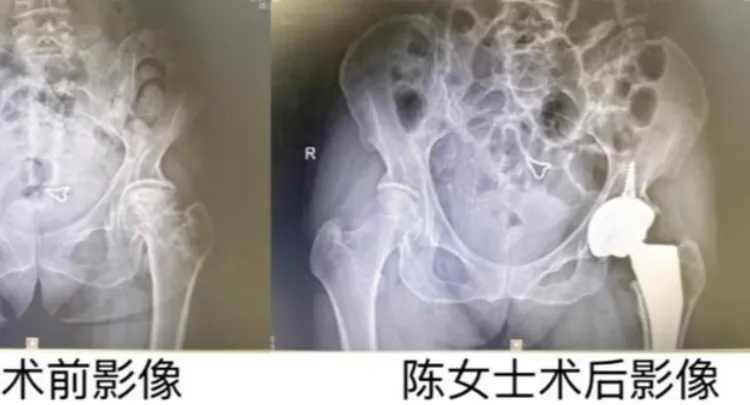
A 46-year-old woman suffers from alcohol addiction, which has led to aseptic necrosis of the femoral head.
This year, Ms. Chen (a fictitious name), 46 years old, has been drinking alcohol regularly and has found it very difficult to quit. Three years ago, she suffered an accidental fall that resulted in a fracture of her femoral neck. After undergoing surgery to place a hollow screw for internal fixation, she spent a year and a half recovering. Upon reviewing her condition, it was confirmed that the fracture had healed, leading her to relax and resume her drinking habit.
In the early stages of healing from the fracture, she did not experience any discomfort. However, she gradually began to experience subtle pain in the hip and groin, which intensified when walking or moving the hip joint, although there was slight improvement when resting. She misinterpreted these symptoms as a normal sequel of the surgery and did not seek medical attention. It was only when the pain increased recently and her hip mobility was severely limited, making it difficult to lift her leg, abduct, and even causing limping while walking, that she decided to consult a doctor urgently.
At the Department of Sports Medicine and Joints at the Second Hospital of Hunan Province (Provincial Neurology Hospital), test results show that Ms. Chen has developed severe ischemic necrosis of the femoral head due to alcohol, in addition to presenting degeneration of her hip joint and fluid in the joint cavity. Her condition has progressed to a terminal state, and conservative treatment has been ineffective, hence recovery of her ability to walk can only be achieved through total hip arthroplasty.
The dual blow of alcoholism and fractures to the femoral head is primarily due to the impact of alcohol on bone and joint health, as well as the complexities of recovery after fracture.
Firstly, alcoholism affects bone metabolism, inhibiting the ability of bones to grow and regenerate. Alcohol consumption leads to decreased bone density and increases the risk of fractures. Excessive drinking can also impair the body's ability to absorb calcium and vitamin D, both of which are essential for maintaining bone health.
Secondly, the femoral head, located at the upper end of the thigh bone, is a weight-bearing joint subject to considerable stress. When a fracture occurs in the femoral head, the recovery process is influenced by various factors, including pain, limited mobility, and insufficient blood supply. Alcohol also delays fracture healing as it diminishes the body's self-repair capabilities and increases the risk of complications.
Therefore, the combination of alcoholism and femoral head fractures means the health of the bone is undermined by alcohol, and the occurrence of fractures further exacerbates this damage, resulting in a double blow to the femoral head.
Director Li Baojun from the sports medicine and orthopedic department at the hospital explained that each progression in Ms. Chen's disease is directly related to the damage caused by alcohol. The combination of these two high-risk factors has accelerated the process of necrosis of the femoral head.
Excessive alcohol consumption harms bones and poses risks of necrosis.
Long-term excessive alcohol consumption can significantly damage bone health from the roots: on one hand, alcohol interferes with the absorption of calcium and vitamin D in the body, drastically reducing the body's ability to repair bones, causing them to become porous and weak, and micro-injuries to the femoral head cannot heal on their own.
On the other hand, alcohol directly damages the blood vessels that supply blood to the femoral head, causing spasms and constriction of vessels, increasing blood viscosity and even leading to the formation of small clots that block the supply of nutrients to the femoral head. As a result, bone cells suffer ischemia and gradually undergo necrosis, thus sowing the seeds of a lethal pathology.
Fractures exacerbate the situation and accelerate the process of necrosis.
Fracture of the femoral neck is itself the highest risk factor for necrosis of the femoral head, as the fracture can directly damage the blood vessels supplying blood to the femoral head. Ms. Chen, due to her alcoholism, already exhibited osteoporosis and vascular damage. Following the fracture, the fracture ends compress and further destroy the small blood vessels within the femoral head. Furthermore, the disruption of fat metabolism induced by alcohol leads to the formation of a large number of fat emboli in the blood, which obstruct the remaining vessels, creating a vicious cycle of 'the more severe the ischemia, the more severe the necrosis,' resulting in rapid necrosis of the femoral head.
In the case of a simple femoral neck fracture, if treated adequately and promptly, most individuals can avoid necrosis of the femoral head. In the case of avascular necrosis of the femoral head caused by alcohol, ceasing drinking in the early stages can allow for conservative treatment to reverse the condition. However, in the case of Ms. Chen, alcohol abuse has complicated the healing of the fracture. Ongoing damage from alcohol consumption has exacerbated circulatory insufficiency, and the combination of both factors has caused the disease to progress rapidly to an advanced stage, thus losing the best opportunity for conservative treatment.
Four key points to stay away from femoral head necrosis.
1. Abstaining from drinking alcohol and limiting its consumption are key preventive measures.
This is the most critical and effective method for preventing alcoholic femoral head necrosis. The general population should strive to avoid alcohol, and those with long-term drinking or alcohol addiction should quit as soon as possible to eliminate alcohol's continuous harm to the femoral head from its roots. Young people should give up the misconception that 'drinking does not harm'.
2. Be aware of early signals and consult a doctor in time.
The initial symptoms of avascular necrosis of the femoral head are atypical and are often confused with common pain in the lower back and legs. Subtle and dull pains may appear in the hip, groin, upper thigh, or inner side of the knee, worsening with movement and improving with rest. There may also be limitations in hip mobility, difficulties in lifting the leg, performing abductions, and rotations. It is important to pay attention to symptoms such as limping and abnormal gait, and to immediately consult an orthopedic physician for evaluation.
3. High-risk groups should undergo regular screening.
Individuals with a history of excessive alcohol consumption, hip injuries, and prolonged use of hormonal medications are considered high-risk groups for femoral head necrosis. Even if they do not exhibit symptoms, regular checks of the hip joint are recommended. Following a femoral neck fracture, it is even more important to strictly adhere to the physician's recommendations for follow-up evaluations to detect early signs of necrosis and seize the critical period to preserve the hip.
4. Postoperative patients should provide adequate care.
Patients undergoing hip replacement surgery must completely abstain from alcohol postoperatively, strictly follow medical guidance for rehabilitation, and gradually restore joint function. It is important to avoid intense physical exercises and heavy work in daily life, as well as to undergo periodic evaluations. Consuming foods rich in calcium and protein is recommended to supplement bone nutrition, protect the prosthesis, and ensure a good quality of life.
Hunan Medical Chat Special Contributor: Hunan Provincial Second People's Hospital (Provincial Neurological Hospital) Department of Sports Medicine and Orthopedics Peng Yichuan, Mao Yini.
Follow @HunanMedicalChat for more health disclosure information.
(Edition 92)
#medicina del deporte
#conocimiento de la salud


© 2025 Tribu Salud.