
¡atención al dolor abdominal súbito! puede ser disección de arteria mesentérica
feb 26, 2026
Title: Attention to Sudden Abdominal Pain! It Could Be Mesenteric Artery Dissection Author: Zhang Xinmei, Chief Nurse of the Vascular Surgery Department at Quzhou People's Hospital, Cheng Guobing, Chief Physician of the Vascular Surgery Department at Quzhou People's Hospital. Profile: Superior mesenteric artery dissection can be fatal, with intense abdominal pain as a key symptom. Keywords: ['Scientific disclosure in medicine.', 'First aid']
In vascular surgery emergencies, we often encounter patients experiencing sudden acute abdominal pain, mistakenly believing it to be gastritis, enteritis, or indigestion. They self-medicate with antacids and endure the pain, leading to delays in receiving timely medical attention. This potentially deadly abdominal pain, which is easy to misdiagnose, could be caused by a dissection of the superior mesenteric artery. Although not as recognized as aortic dissection, it is equally dangerous and one of the leading causes of acute intestinal ischemia and intestinal necrosis. If overlooked or misdiagnosed, the consequences can be devastating. Today, we will closely examine this 'killer of intestinal blood supply' and learn how to quickly identify it and address it scientifically.
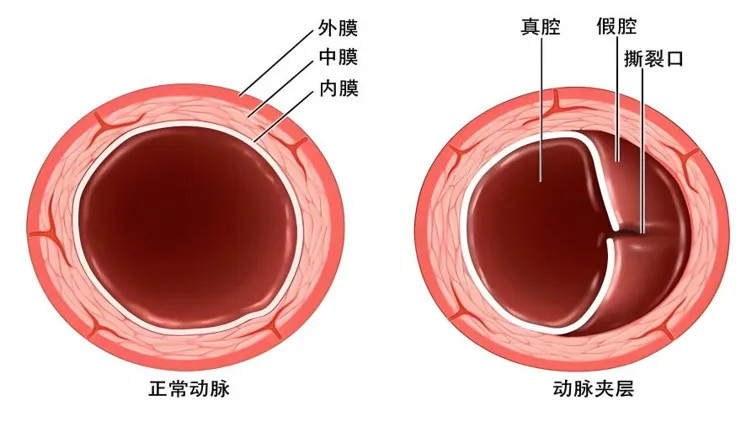
Superior mesenteric artery dissection is a vascular disorder primarily involving the mesenteric artery, which is responsible for supplying blood to the small intestine and part of the large intestine. In mesenteric artery dissection, the inner layer of the arterial wall tears, allowing blood to enter the middle layer of the wall, forming a dissection. This condition may lead to obstructed blood flow, resulting in abdominal pain, indigestion, and in severe cases, intestinal ischemia or other complications. Accurate diagnosis and timely treatment are crucial to prevent more severe consequences.
It is the central blood vessel supplying blood to the small intestine and part of the large intestine within the abdominal cavity, similar to a highway transporting 'oxygen and nutrients' to the intestine. When a problem occurs, the intestine can immediately enter a 'supply crisis.' Simply put, this happens when the inner layer of an artery wall tears suddenly, causing high-pressure blood flow to infiltrate the middle layer of the vessel wall, 'tearing' the wall into two layers: one that is the normal lumen supplying blood, and another that is an abnormal false lumen. This false lumen tends to expand, compressing the true lumen and causing the blood passage to narrow or even block. Consequently, the intestine experiences intense pain due to lack of oxygen and blood, which in severe cases can lead to intestinal necrosis and rupture of blood vessels, endangering life.
In clinical practice, the most common form is isolated rupture of the superior mesenteric artery; that is, the disease only affects the superior mesenteric artery without involving other blood vessels like the aorta. This condition is most frequently seen in middle-aged individuals, typically between 40 and 60 years old, with a significantly higher incidence rate in men compared to women. With the increasing use of abdominal computed tomography, the clinical detection rate has risen every year, and it is no longer considered a 'rare disease.'
#primeros auxilios
#divulgación científica en medicina.


© 2025 Tribu Salud.