
Cáncerígenos en Sichuan: peligros ocultos en el Festival de Primavera
feb 26, 2026
Title: Carcinogens in Sichuan: Hidden Dangers during the Spring Festival. Author: N/A. Reviewer: N/A. Commissioner: N/A. Production Information/Organization: N/A.
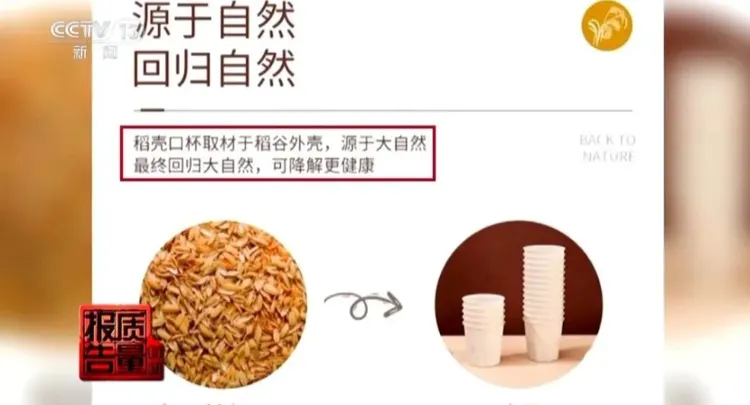
"Mom, give me one of those biodegradable cups made from rice husk!"
"Alright, eco-friendly and healthy, you can use it with confidence!"
Wait a moment, don’t rush to serve the water!
The fancy disposable cups you have stocked up for the New Year might just be playing a game of 'Werewolf' with you!
· First deception: false biodegradability, a real scam.
The Shanghai Consumer Protection Commission recently made a significant discovery: they sent 40 types of disposable cups to a laboratory, and the first finding left everyone stunned.
Many cups marketed with labels such as 'made from rice husk', 'naturally biodegradable' and 'return to nature' actually cannot degrade.
In the experiment, a 'starch-based + PP' cup remained intact after more than 20 days of testing in a compost environment, showing no signs of degradation.
The moment of revelation has arrived: these so-called 'biodegradable' cups indeed used environmentally friendly materials like tapioca, corn starch, and rice husks. However! To cut costs, manufacturers mixed in non-degradable polypropylene (PP plastic)!
In summary: it’s like a deception; it claims to be biodegradable, but in reality, it is just an ordinary plastic cup.
Some merchants selling these cups have privately revealed that they are unsure whether those products labeled as 'biodegradable' can actually degrade.
The second issue: two cup models crossed the safety red line.
In addition to focusing on whether disposable cups are biodegradable, safety should not be overlooked!
"Killers No. 1": Disposable Kung Fu tea cup from Huilin brand.
This cup presents a level of '3-chloro-1,2-propanediol' that exceeds the limit by three times. This name may be complicated to pronounce, but it is important to remember its 'identity': the International Agency for Research on Cancer, which is part of the World Health Organization, classifies it as a Group 2B carcinogen. '3-chloro-1,2-propanediol' has harmful effects, such as interfering with male hormone activity, damaging the nervous system, and affecting immune function.
- Understand the classification of carcinogens! A solid knowledge prepares you for any eventuality.
The International Agency for Research on Cancer, part of the World Health Organization, classifies carcinogens into four categories based on their relationship with cancer:
"Assassin No. 2": Plastic-free paper cups from Yingjie brand.
This cup has detected an excess of total fluoride. What does fluoride excess mean? It means that fluoride has been added to the cup that will never degrade in the environment. These compounds will flow into the soil and water, and then, through the food chain, end up 'making a home' in your body.
Why is this happening? One word: money!
The expert clearly pointed out: the root of the problem is that companies try to save costs at all costs.
Currently, raw material updates are rapid, standards are not keeping pace, and there are regulatory gaps. Some dishonest manufacturers take advantage of this situation, using cheap and non-compliant raw materials while profiting under the premise of being 'eco-friendly', making consumers pay the cost of their health.
The comment section has already fallen: 'Just stocked a box of rice husk cups, now I don’t know whether to cry or laugh' 'Using them year after year, falling for it year after year, asking for reliable brand recommendations'
- When buying disposable cups, remember these 3 points:
- Check appearance and identification.
Disposable food utensils (including plastic and paper) are subject to production licensing management. When selecting these products, consumers should carefully check the packaging for the QS logo, proper temperature, expiration date, and other information. It is recommended to choose disposable utensils that show uniform color, a smooth surface, soft edges, and do not contain decorative patterns.
- Avoid buying products that are too soft.
Paper or plastic cups that lack good rigidity are often very soft when squeezed, and their load-bearing capacity often does not meet standards. When poured with water or drink, they deform severely when lifted, and some may even be unholdable. If filled with hot water, they can easily cause burns.
- Pay attention to distinguish between material and use.
At the bottom of plastic cups, there is always a triangular symbol with a number, which represents the cup material and usage conditions. On the market, disposable plastic cups are commonly made of two types of materials: PP and PS. The PP (polypropylene) material is safe and non-toxic, and can withstand temperatures of about 130 °C, making it suitable for holding boiling water or hot beverages under normal conditions. On the other hand, PS (polystyrene) material is generally used for holding cold or warm beverages.
Hurry to share this with family and friends, and spread this 'problem-avoiding guide'! When buying cups for the New Year, do not let your health pay for a 'false respect for the environment'!
#seguridad del producto
#salud alimentaria.

© 2025 Tribu Salud.