
Cómo manejar múltiples medicamentos en ancianos que viven solos
feb 26, 2026
Title: How to Manage Multiple Medications in Elderly Living Alone Profile: The increase in medication problems among elderly individuals living alone is concerning for families; management is explored through a real case. Keywords: ['Elder Health', 'Medication Management'] Author: Yu Xuefei, Chief Nurse of the Endocrinology Department at Wenzhou Central Hospital.
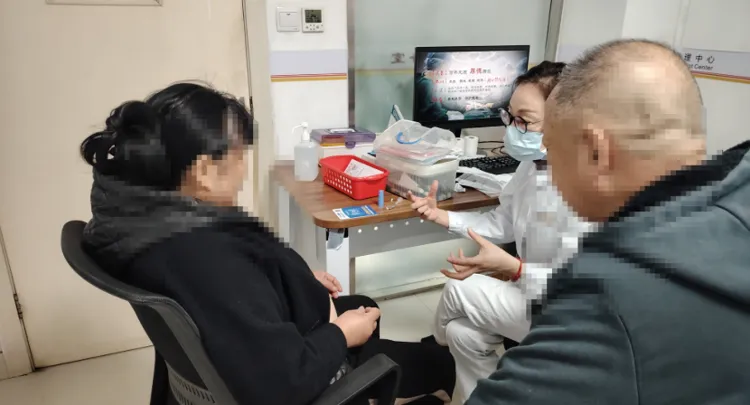
In the hallway of the chronic disease consultation, sunlight casts long shadows. The daughter guides 80-year-old Grandma Chen while the son carries three plastic bags filled with various medications that their mother has brought home after discharge, clattering against each other and producing an unsettling sound.
Elder Chen, who lives alone, suffered severe hypoglycemia two weeks ago after accidentally injecting a full dose of long-acting insulin due to her blurred vision. After halting her diabetes medication, her blood sugar levels rose uncontrollably. Her daughter, who returned from another city, feels overwhelmed by her mother's complicated health situation, which includes diabetes, hypertension, coronary heart disease, osteoporosis, and chronic gastritis, alongside a long list of medications. "Mom, have you taken your medicine? Before or after meals?" has become a repetitive question every day.
In the hallway of the chronic disease clinic, I approached Grandma Chen and asked: "Grandma, are you feeling unwell?"
Grandma Chen sighed and replied: "Nurse, I can't see well and my head is confused. The kids are busy with their work, and I don't want to always bother them, but this medicine... I really can't understand it."
The daughter, with tears in her eyes, said: "Nurse, it's not that we are ungrateful; we really don't understand. Each doctor says these medications are important; there are more than a dozen, and we are confused just looking at them, let alone her."
The son dumped three large bags of medications onto the table: "These are from a month ago, these are from two months ago, and what was left from before. We have reviewed them for a long time and still haven't figured out which ones she should take." The boxes of medications, of various sizes, were scattered everywhere: some were to be taken once a day, others three times a day, some before meals, and others after; there were even three types of insulin...
At that moment, I realized that it was not just about controlling blood sugar, but about the lonely struggle of an elderly person in the maze of multiple medications and the feeling of helplessness faced by a family under the pressure of caregiving.
The first step is to "reorganize the medication." I assisted them in recording all the medications in a table and, with the list in hand, spoke with the doctors to develop a "very simple" plan for elderly patients with multiple diseases who live alone, like Grandma Chen: discontinue auxiliary traditional Chinese medications, combine repeated medications; given the severe injection errors and visual difficulties, pause insulin and switch to oral medications to lower glucose; replace two antihypertensive medications with a single combined tablet and simplify the essential daily oral medications.
The second stage is crucial: how to help her remember? Grandma Chen cannot read and has vision problems.
I thought of a way: draw three horizontal lines on the medication box, representing morning, noon, and night; write the count with Arabic numerals, red for before meals and blue for after meals. For example, if the first line has the blue number 2, and the second and third lines are 0, it means to take 2 tablets after breakfast. If all three lines have the red number 1, it means to take 1 tablet before each meal.
I will use a medication box and pills to demonstrate step by step. Grandma Chen rubbed her hands and murmured: "Now it’s clear, the red ones are taken before meals, the blue ones after meals, how many to take at each meal is shown on each line... Now I feel at ease."
I turned to the children and said: "You need to approach older adults like you teach children, with patience and repetition." I suggested they could buy a smart pill organizer for once-weekly sorting by the son, labeling with red and blue stickers, and placing it in an accessible location. The daughter could check their medication situation via video call weekly.
Finally, I told the siblings: "What you brought are not just bags of medicines, but the love and concern that you feel for mom. Now, we must together turn this 'concern' into the 'peace' that she can have."
As they left, Grandma Chen's three large bags of medications turned into a simplified prescription and medication boxes that are easy to understand. Grandma Chen's eyes seemed brighter, her son's eyebrows relaxed, and her daughter walked with lighter steps.
This story helps us understand that managing chronic diseases is not just about controlling a few lab tests but about caring for that person who wakes up each morning facing a pile of medication boxes. The hardest part for Grandma Chen is not remembering the medications but facing it all alone.
We make a professional reduction, eliminating unnecessary complexity; we add care, providing clear guidance, suitable tools for older adults, and emotional support. In this 'reducing and adding,' we build a bridge that allows an elder to be seen, respected, and face each day with peace and dignity.
#salud de los ancianos
#gestión de medicamentos

© 2025 Tribu Salud.